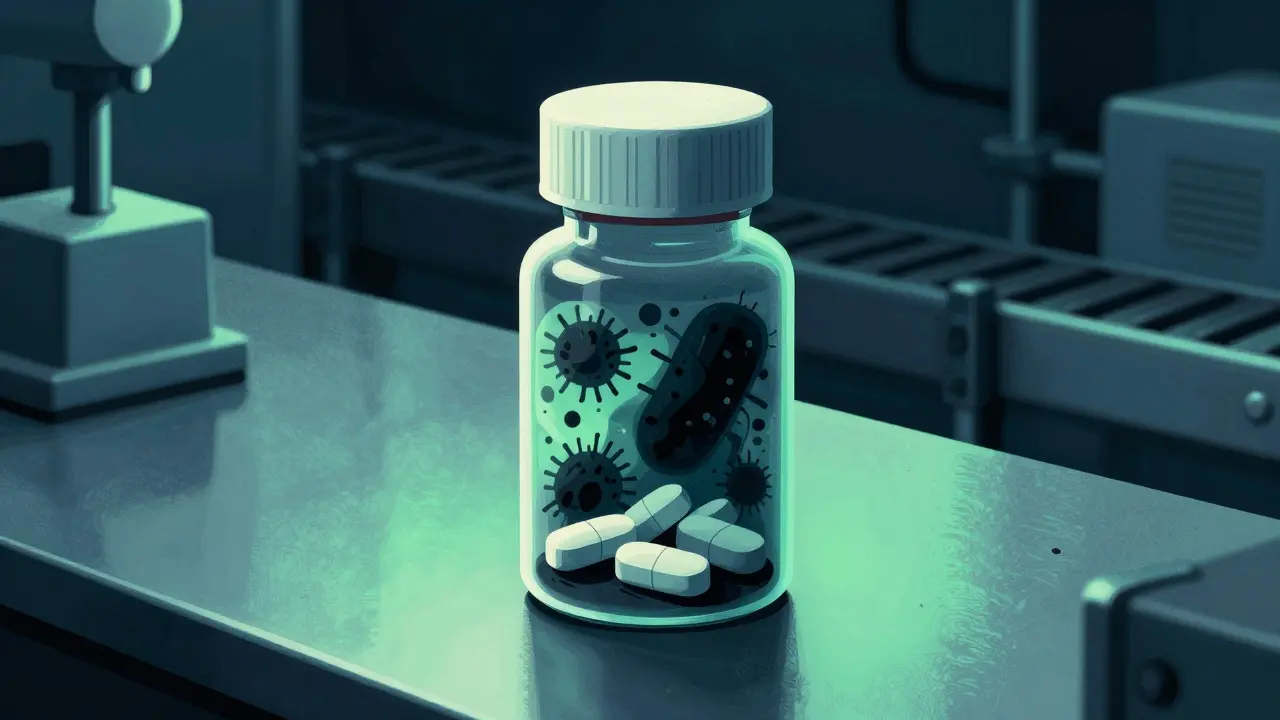
When you pick up a prescription for a generic medication, you expect it to work exactly like the brand-name version. It should have the same active ingredients, the same strength, and the same safety profile. But what if invisible impurities or harmful microbes are hiding inside that pill? This is not just a theoretical fear; it is a documented reality in the global pharmaceutical supply chain. Generic drugs make up 90% of all prescriptions filled in the United States, yet they face unique challenges regarding contamination risks due to complex manufacturing processes and tight profit margins.
The stakes are high. In 2022 alone, contamination-related issues accounted for 22% of all drug recalls reported by the U.S. Food and Drug Administration (FDA), with 37% of those specifically affecting generic products. Understanding how these contaminants get into your medicine, who is responsible for stopping them, and what you can do to protect yourself is essential for patient safety. This guide breaks down the science, the regulations, and the practical steps involved in preventing and responding to generic drug contamination.
Understanding the Source of Contamination
To understand the risk, we first need to look at where generic drugs come from. The modern generic industry relies heavily on global supply chains. According to an FDA transparency report from 2023, approximately 80% of the Active Pharmaceutical Ingredients (APIs) used in U.S. drugs are manufactured overseas, primarily in India and China. While this globalization keeps costs down, it introduces logistical complexities that can compromise quality control.
This definition covers several distinct pathways:
- Chemical Residues: When a manufacturing facility produces multiple drugs, trace amounts of one drug can remain on equipment and contaminate the next batch. For example, if a machine previously processed a potent antibiotic and is not cleaned thoroughly, that antibiotic residue ends up in the next product, which might be a painkiller.
- Microbial Growth: Bacteria, yeast, and mold can thrive in humid or poorly sanitized environments. The United States Pharmacopeia (USP) <61> sets strict limits, allowing no more than 10^3 colony-forming units (CFU) per gram for total aerobic microbial count in non-sterile oral dosage forms.
- Environmental Particles: Humans are surprisingly dirty. A study by Lighthouse Worldwide Solutions found that personnel contribute 75-80% of particles in pharmaceutical cleanrooms. An average person sheds about 40,000 skin cells per minute, generating roughly 100,000 particles of 0.3 microns or larger even when standing still.
Additionally, specific handling errors create significant risks. OSHA’s 2021 Hazardous Drugs Evaluation noted that piercing drug vial septa with needles was involved in 62% of hazardous drug contamination incidents, while breaking ampules accounted for 28%. These physical breaches allow external contaminants to enter sterile solutions.
Why Generics Face Higher Scrutiny
You might wonder why generic drugs seem to appear in news headlines about recalls more often than brand-name drugs. Is the quality inherently worse? Not necessarily. By law, generic drugs must be therapeutically equivalent to their brand-name counterparts. However, economic pressures create different operational realities.
Brand-name manufacturers typically operate with profit margins of 60-70%, whereas generic manufacturers often work with margins of only 20-25% (Commonwealth Fund, 2017). This financial constraint can impact investment in state-of-the-art quality control infrastructure. Data from the FDA’s 2022 inspections supports this disparity: 8.3% of generic manufacturing facilities received Form 483 observations for contamination control issues, compared to just 5.1% for innovator (brand-name) facilities.
Geography also plays a role. Indian generic manufacturers showed a 12.7% rate of contamination-related observations in 2022 FDA inspections, compared to 6.4% for U.S.-based facilities. Older facilities built before 2000 show a 34% higher contamination risk overall, regardless of whether they produce generics or brands. However, some generic leaders are outperforming expectations. Teva Pharmaceuticals’ facility in Bologna, Italy, reduced cross-contamination incidents by 78% between 2018 and 2022 by implementing closed manufacturing systems, proving that rigorous standards are achievable across the board.
| Factor | Generic Manufacturers | Brand-Name Manufacturers |
|---|---|---|
| Average Profit Margin | 20-25% | 60-70% |
| FDA Inspection Observations (2022) | 8.3% | 5.1% |
| Regulatory Compliance Cost (% of Mfg) | 12-15% | 8-10% |
| Primary API Sourcing | Global (India/China dominant) | Varied, often vertically integrated |
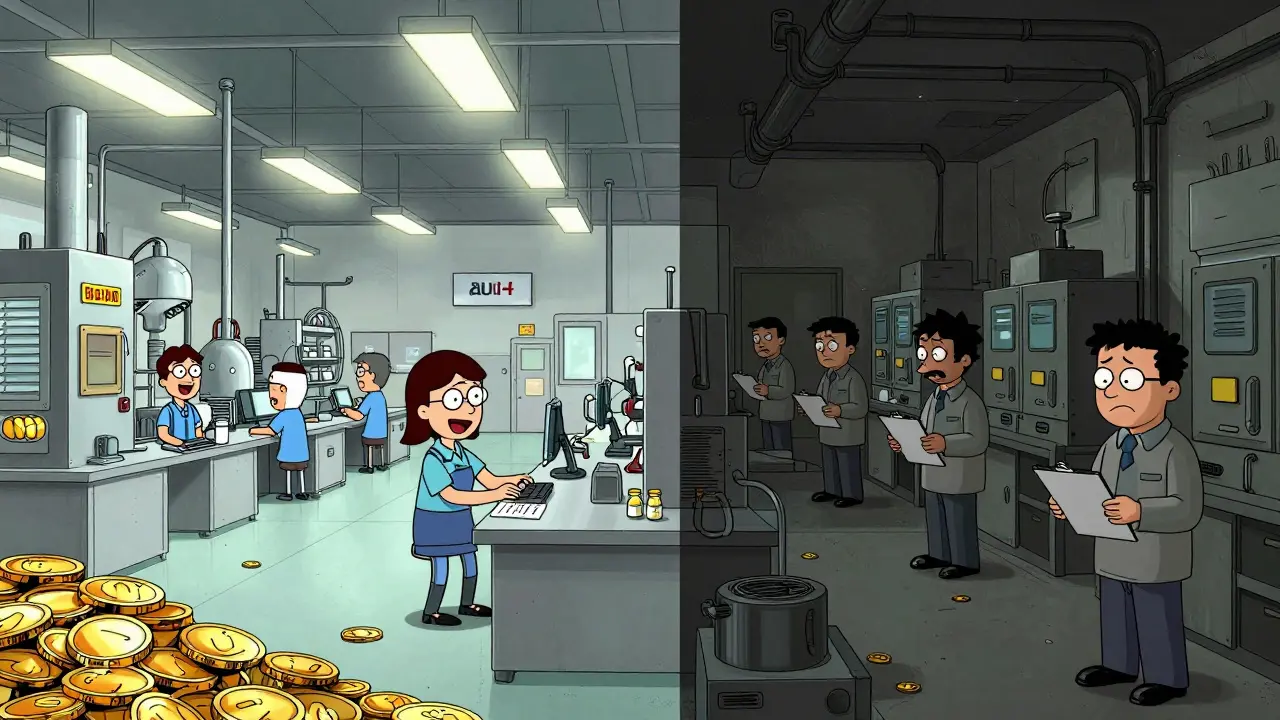
Prevention Strategies in Manufacturing
Preventing contamination requires a multi-layered approach known as Good Manufacturing Practices (GMP). These are not optional guidelines; they are legal requirements enforced by the FDA and other global regulatory bodies. Here is how effective prevention works in practice:
- Facility Design and Air Quality: Manufacturing areas must meet specific cleanliness standards. Non-sterile manufacturing requires at least ISO Class 8 (Class 100,000) environments, while sterile products demand ISO Class 5 (Class 100) conditions. This involves advanced air filtration systems that constantly remove airborne particles.
- Cleaning Validation: After each production run, equipment must be cleaned. But how do we know it’s clean enough? Protocols must demonstrate the removal of at least 10 parts per million (ppm) of previous product residue. This is verified through swab testing with 95% confidence intervals. Dr. Michael Kopcha, former FDA Director of Pharmaceutical Quality, has argued that the standard 10 ppm limit may be insufficient for highly potent drugs, suggesting a move toward product-specific acceptance criteria based on toxicological evaluation.
- Personnel Training: Since humans are the largest source of contamination, training is critical. GMP Standard Operating Procedures (SOPs) mandate 8-12 hours of initial contamination prevention training per employee, with annual refreshers. This includes proper gowning procedures to minimize skin cell shedding.
- Rapid Microbiological Methods: Traditional culture methods take up to 7 days to detect microbial growth. New technologies reduce this detection time to just 4 hours. By 2022, 63% of top generic manufacturers had implemented some form of rapid testing, allowing them to catch issues before products leave the factory.
Implementing these strategies is expensive. Facility modifications to prevent contamination typically cost $2-5 million for medium-sized manufacturers. Closed isolator systems add another $500,000 to $2 million per production line. Yet, the cost of failure is far higher. The FDA Economic Impact Report (2022) calculated that contamination-related recalls cost manufacturers an average of $18.7 million per incident.
Responding to Contamination Incidents
Despite best efforts, contamination does occur. When it does, a structured response mechanism kicks in to protect public health. The primary tool for this is the FDA’s MedWatch reporting system, which allows healthcare professionals and patients to report adverse events and product problems.
Between 2020 and 2022, 1,247 reports of potential generic drug contamination were filed via MedWatch. Of these, 387 specifically mentioned adverse events. One documented case involved a patient who developed severe dermatitis from a contaminated generic hydrocortisone cream (FDA MedWatch Report #123456, July 18, 2021). Community feedback also highlights real-world concerns; on Reddit’s r/pharmacy community, user u/PharmTech99 posted in January 2022 about metronidazole tablets with unusual blue specks that tested positive for copper contamination.
Once a problem is identified, the manufacturer is required to initiate a recall under 21 CFR Part 7. Recalls are classified by severity:
- Class I: Dangerous or defective products that could cause serious health problems or death.
- Class II: Products that might cause temporary or medically reversible adverse health consequences.
- Class III: Products that are unlikely to cause adverse health reactions but violate labeling or manufacturing laws.
For patients and pharmacists, the challenge lies in verification. A 2022 survey by the National Community Pharmacists Association found that 63% of independent pharmacists lack the resources to conduct independent contamination testing. They rely entirely on the integrity of the supply chain and regulatory alerts. If you suspect a drug is contaminated-look for changes in color, smell, texture, or unexpected side effects-contact your pharmacist immediately and report it to MedWatch.
The Future of Drug Safety
The landscape of drug safety is evolving rapidly. The FDA’s 2023 Drug Competition Action Plan introduced enhanced contamination screening for high-risk generics. As of January 1, 2023, mandatory nitrosamine testing was implemented for all sartan-class drugs, following the massive 2018-2019 valsartan crisis that affected 22 manufacturers and resulted in $1.2 billion in losses.
Technology is also stepping in to help. The FDA’s PREDICT system now uses predictive analytics to flag potentially contaminated imports, identifying 37% more risky shipments than its predecessor. Looking ahead, the FDA plans to implement AI-powered environmental monitoring systems by 2024. These systems will analyze over 15,000 data points per facility to predict contamination risks with 89% accuracy. Industry analysts project that these advancements will decrease contamination-related recalls by 40% by 2027.
However, vigilance remains key. As Dr. Scott Gottlieb, former FDA Commissioner, noted in a 2021 JAMA commentary, "the globalization of pharmaceutical supply chains has created contamination risks that outpace our current inspection capabilities." With the FDA inspecting only 1% of imported drug products for impurities, the burden of safety falls on a combination of robust manufacturer compliance, advanced technology, and informed consumer awareness.
Are generic drugs less safe than brand-name drugs?
Generic drugs are required to be therapeutically equivalent to brand-name drugs, meaning they contain the same active ingredients and work the same way in the body. However, statistical data shows that generic facilities receive slightly more contamination-related observations during FDA inspections (8.3% vs 5.1%). This is largely attributed to tighter profit margins and older infrastructure in some generic manufacturing plants, not inherent inferiority of the drugs themselves. Both types of drugs must meet identical quality standards.
How can I tell if my medication is contaminated?
Most contamination is microscopic and cannot be seen with the naked eye. However, visible signs include unusual discoloration, strange odors, crumbling tablets, or liquid medications that appear cloudy or separated. If you experience unexpected side effects or allergic reactions after starting a new generic medication, stop taking it and consult your healthcare provider immediately. You can also check the FDA website for recent drug recalls.
What is the FDA doing to prevent contamination in generic drugs?
The FDA enforces Good Manufacturing Practices (GMP) and conducts regular inspections of domestic and foreign facilities. Recent initiatives include the 2023 Drug Competition Action Plan, which mandates nitrosamine testing for certain drug classes. The agency is also deploying AI-driven tools like the PREDICT system to better target high-risk imports for inspection. Additionally, the FDA collaborates with the USP to update standards for disinfectant validation and microbial limits.
Why are so many APIs manufactured overseas?
Approximately 80% of APIs for U.S. drugs are made overseas, primarily in India and China, due to lower labor and production costs. This globalization allows for affordable generic medications but creates supply chain vulnerabilities. Regulatory agencies struggle to inspect every foreign facility, leading to reliance on self-reporting and periodic audits. This complexity increases the risk of undetected contamination entering the U.S. market.
What should I do if I suspect a drug recall affects my medication?
If you suspect your medication is part of a recall, check the FDA’s official recall database or ask your pharmacist. Do not stop taking prescribed life-saving medications without consulting your doctor. Return the recalled product to your pharmacy for a refund or replacement. You can also report any adverse events or quality issues directly to the FDA’s MedWatch program to help identify broader safety trends.
Megan Crossland
July 13, 2026 AT 19:42it is absolutely disgraceful that we allow profit margins to dictate the safety of human lives. these companies are literally gambling with our health because they want to save a few pennies on cleaning validation protocols. it makes me sick to my stomach knowing that my grandmother's blood pressure meds might have been processed on the same line as some other chemical without proper decontamination. we need stricter laws and immediate accountability for every single facility that cuts corners. i refuse to trust an industry that values shareholder dividends over patient survival.
Jairam Prasad
July 15, 2026 AT 04:30ah yes, the classic western narrative where everything made outside your borders is inherently sinister while domestic production is pure gold. fascinating how you ignore the fact that brand name drugs also rely on global supply chains for their active ingredients. perhaps if we looked at this with less prejudice and more scientific rigor we would see that quality control is about standards not geography. but sure lets blame the poor factory worker in mumbai instead of the regulatory loopholes in your own country.
Sinead Doyle
July 16, 2026 AT 15:05u guys are so naive thinking the fda actually cares about us. its all part of the big pharma agenda to keep us docile and dependent on their poison. the nitrosamine testing is just a smokescreen to hide the real contaminants they dont want u to know about like heavy metals and synthetic hormones. ive read the documents from the deep web archives and its clear that the entire generic market is rigged by cabals who profit from sickness. stop taking those pills before it is too late and start looking into natural alternatives that havent been corrupted by the industrial complex.
Ed Ostrego
July 17, 2026 AT 08:45hey everyone let us focus on the solutions here! the article mentions rapid microbiological methods reducing detection time to just four hours which is huge progress. imagine if every manufacturer adopted this technology immediately. we can make a difference by supporting companies that invest in closed manufacturing systems and better personnel training. lets spread awareness about medwatch reporting so we can hold manufacturers accountable together. we got this!
Ambarish Pal
July 18, 2026 AT 11:10oh wonderful another reason to panic every time i swallow a pill. apparently breathing air is dangerous too since humans shed forty thousand skin cells per minute. should i wear a hazmat suit to go to work then? this whole obsession with contamination is getting out of hand. we used to just take medicine and live our lives without worrying about whether a bacterium sneezed on my aspirin. now we are told to be terrified of invisible particles. what is next will water kill us?
Andrew Donovan
July 19, 2026 AT 04:14look at the bright side folks the implementation of ai powered environmental monitoring systems by twenty twenty four sounds like something straight out of science fiction becoming reality. predicting contamination risks with eighty nine percent accuracy is a game changer for public health. it shows that innovation and regulation can work hand in hand to create a safer future for all of us. let us embrace these technological advancements rather than fearing them because they represent hope and progress in healthcare delivery.
Patrick Meyer
July 21, 2026 AT 00:28i find it utterly laughable that people still believe generic drugs are equivalent to brand names when the data clearly shows higher inspection failure rates. its obvious that cheap equals low quality no matter how much marketing spin you put on it. only the truly desperate or financially illiterate would choose generics over the proven reliability of established brands. if you cant afford the real thing maybe you shouldnt be medicated at all.
Vineet Hawelia
July 21, 2026 AT 23:58it is important to note that the therapeutic equivalence requirement ensures that generic drugs contain the same active ingredients as their brand-name counterparts. the slight disparity in inspection observations may be attributed to various factors including older infrastructure rather than inherent inferiority. patients should consult with their healthcare providers regarding any concerns about medication quality and report adverse events through official channels such as medwatch. maintaining open communication with medical professionals is essential for ensuring safe and effective treatment outcomes.