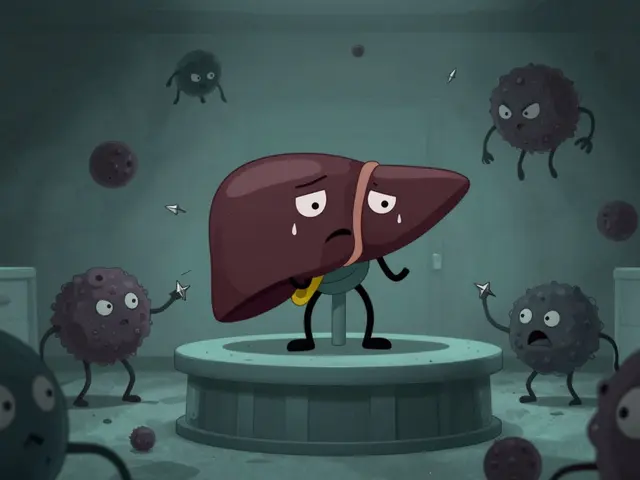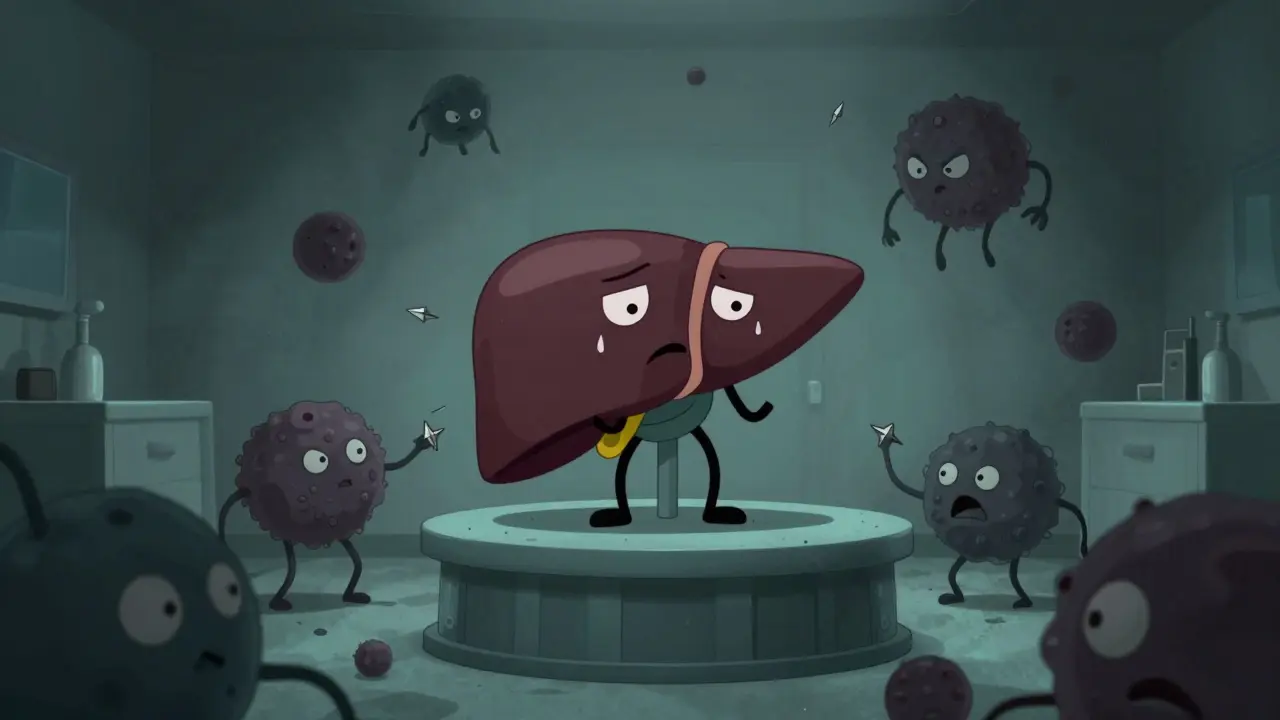
Your immune system is supposed to protect you. In Autoimmune Hepatitis (AIH), it turns on your own body, specifically attacking your liver cells. This chronic inflammatory condition causes persistent damage that can lead to cirrhosis or liver failure if left unchecked. But here is the good news: unlike many other liver diseases, AIH responds very well to treatment. The standard approach involves a combination of immunosuppressive medications like corticosteroids and azathioprine, which have been the cornerstone of therapy since the 1970s.
Diagnosing this condition isn't straightforward because there is no single test that says "yes" or "no." It requires a detective-like approach involving blood work, antibody testing, and often a liver biopsy. Understanding how these pieces fit together helps you navigate the journey from confusion to control. Let’s break down exactly what happens during diagnosis, how the drugs work, and what you can expect in the long run.
The Diagnostic Puzzle: How Doctors Confirm AIH
You might notice symptoms like extreme fatigue, joint pain, or jaundice (yellowing of the skin and eyes), but many people feel fine until routine blood tests show abnormal liver enzymes. When doctors suspect AIH, they look for a specific pattern of clues. First, they check for elevated levels of immunoglobulin G (IgG). In active AIH, IgG levels are typically at least 1.5 times higher than the upper limit of normal.
Next comes the autoantibody panel. About 80% of cases are Type 1 AIH, characterized by antinuclear antibodies (ANA) or smooth muscle antibodies (SMA) at titers of 1:40 or higher. Type 2 AIH is rarer and involves liver-kidney microsomal type 1 antibodies (LKM1). However, recent guidelines from the European Association for the Study of the Liver (EASL) suggest that subclassifying based on these antibodies doesn’t change how we treat the disease, so the focus has shifted more toward overall clinical presentation.
The gold standard for confirmation remains the liver biopsy. This procedure involves taking a tiny sample of liver tissue using a thin needle, usually guided by ultrasound. Pathologists look for "interface hepatitis," which is inflammation at the border between healthy liver tissue and the portal tracts. A score greater than 15 on the Revised International Autoimmune Hepatitis Group (IAIHG) scoring system indicates probable AIH, while a score over 20 confirms it. While the idea of a biopsy sounds scary, the risk of serious complications is low, around 0.1% to 0.3%.
First-Line Treatment: Steroids and Azathioprine
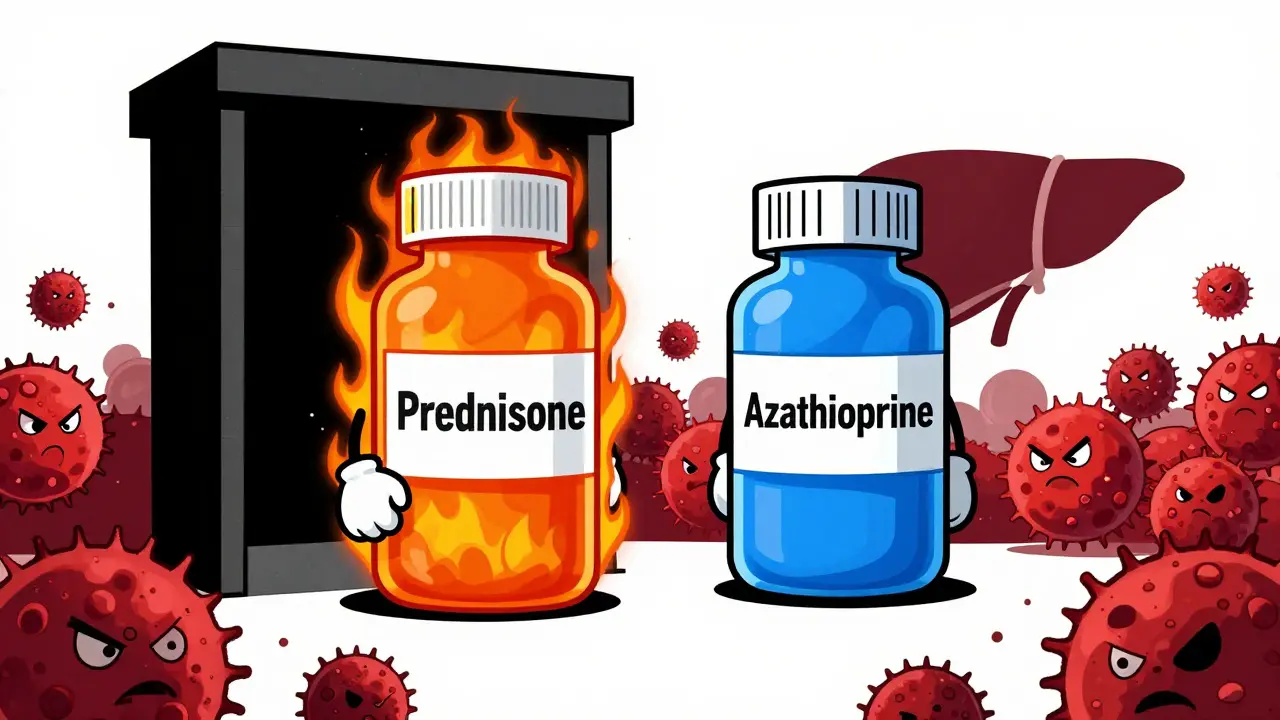
Once diagnosed, the goal is to suppress the immune attack quickly to prevent scarring (fibrosis). The standard regimen combines prednisone (or prednisolone) with azathioprine. Prednisone works fast-it usually starts lowering liver enzymes within two weeks. Azathioprine takes longer to kick in but allows you to reduce the steroid dose significantly, sparing you from its harsher side effects.
Typically, treatment starts with prednisone at 0.5 to 1 mg per kilogram of body weight per day, capped at 60 mg. Over eight weeks, this dose is tapered down to 10-15 mg daily. At the same time, you start azathioprine at 50 mg daily, gradually increasing it to 1-2 mg per kg per day as tolerated. This combination strategy reduces the risk of steroid-related issues like diabetes, osteoporosis, and cataracts, which affect up to 70% of patients on steroids alone.
| Medication | Role in Treatment | Common Side Effects | Key Monitoring Needs |
|---|---|---|---|
| Prednisone | Rapidly suppresses inflammation | Weight gain, mood changes, insomnia, high blood sugar | Blood pressure, blood glucose, bone density scans |
| Azathioprine | Maintenance therapy; steroid-sparing | Nausea, fatigue, increased infection risk | Complete blood count (CBC), liver function tests |

Safety Checks Before Starting Therapy
Before prescribing these powerful drugs, your doctor will run several safety checks. One critical step is testing for hepatitis B virus (HBV). Immunosuppressants can reactivate dormant HBV in about 15-20% of carriers, leading to severe liver damage. If you’re positive for HBV surface antigen or core antibody, you’ll need prophylactic antivirals like tenofovir alongside your AIH treatment.
Another vital test is for thiopurine S-methyltransferase (TPMT) enzyme activity. Azathioprine is metabolized by this enzyme. Roughly 0.3% of people have a complete deficiency, putting them at a 30-fold higher risk of severe bone marrow suppression. Genetic testing for TPMT costs between $250 and $400 and is now recommended before starting azathioprine. Additionally, getting vaccinated against hepatitis A and B is crucial before starting treatment, as vaccines are less effective once you’re immunosuppressed.
Monitoring Progress and Managing Side Effects
Treatment isn't "set and forget." You’ll need regular blood tests to monitor alanine aminotransferase (ALT), aspartate aminotransferase (AST), and IgG levels. During the initial phase, these are checked every 2-4 weeks. Once stable, monitoring shifts to every 3 months. Complete biochemical response-normalizing these markers-is achieved in 60-80% of patients within 18-24 months.
Steroid side effects are real and impactful. Many patients report "moon face," fluid retention, and sleep disturbances. That’s why tapering prednisone quickly while ramping up azathioprine is key. If azathioprine causes intolerable side effects like pancreatitis or significant bone marrow suppression, doctors may switch to second-line agents like mycophenolate mofetil or calcineurin inhibitors.
Histological remission, meaning the inflammation disappears under the microscope, occurs in 50-70% of patients after 2-3 years. Repeat biopsies are sometimes used to assess this, though they aren't always necessary if blood tests remain normal. The ultimate goal is not just normal labs, but preventing long-term structural damage to the liver.
Long-Term Outlook: Can You Stop Treatment?
Most patients require long-term maintenance therapy. Stopping medication is tempting, but risky. Relapse rates after withdrawal range from 50% to 90%, with most relapses happening within three months of stopping. Some patients attempt tapering off after 2-3 years of sustained remission, with about a 45% success rate at 24 months. This process must be done slowly, over 6-12 months, with close monitoring.
If relapse occurs, restarting treatment usually brings the disease back under control. Newer therapies, including JAK inhibitors and monoclonal antibodies targeting interleukin-6, are showing promise in clinical trials for those who don’t respond to standard care. For now, adherence to the prednisone-azathioprine regimen remains the most reliable path to preserving liver health and quality of life.
How long does it take for autoimmune hepatitis treatment to work?
Biochemical improvement, seen through lower liver enzyme levels, typically begins within 2 weeks of starting prednisone. Full normalization of ALT, AST, and IgG levels usually takes 18 to 24 months of consistent therapy.
What are the main side effects of azathioprine?
Common side effects include nausea, fatigue, and an increased risk of infections. More serious but rare risks include bone marrow suppression and pancreatitis. Pre-treatment TPMT testing helps identify patients at high risk for toxicity.
Is a liver biopsy always necessary for diagnosis?
While some cases can be diagnosed clinically, a liver biopsy is considered the gold standard. It confirms interface hepatitis and rules out other liver diseases, ensuring the correct treatment plan is followed.
Can autoimmune hepatitis be cured?
AIH is a chronic condition, but it can be effectively managed into remission. Most patients require lifelong maintenance therapy. Attempting to stop medication carries a high risk of relapse, so ongoing treatment is usually necessary.
Why do I need hepatitis B testing before starting treatment?
Immunosuppressive drugs like prednisone and azathioprine can reactivate dormant hepatitis B virus in carriers. Testing ensures you receive preventive antiviral medication if needed, protecting your liver from additional harm.