Tricyclic Antidepressants: What They Are, How They Work, and What to Know Before Taking Them
When you hear tricyclic antidepressants, a class of prescription drugs first developed in the 1950s to treat depression by balancing brain chemicals like serotonin and norepinephrine. Also known as TCAs, they were the go-to treatment before SSRIs came along—but they’re still used today, especially when newer drugs don’t work. Unlike newer antidepressants, TCAs affect more than one brain chemical at once, which can make them powerful—but also harder to tolerate.
People take tricyclic antidepressants not just for depression, but also for chronic pain, migraines, and even bedwetting in kids. Drugs like clomipramine, a TCA often prescribed for OCD and severe depression, known for its strong effect on serotonin, and amitriptyline, commonly used for nerve pain and insomnia, even at low doses show how these meds stretch beyond mood. But they come with trade-offs: dry mouth, drowsiness, weight gain, and in rare cases, dangerous heart rhythm changes. That’s why they’re not usually first-line anymore—but they’re not obsolete either.
One big reason doctors still reach for TCAs is when other treatments fail. If you’ve tried SSRIs and SNRIs and still feel stuck, a TCA might be the next step. But you need to know what you’re signing up for. These meds don’t kick in right away—it takes weeks. And if you stop suddenly, you can get withdrawal symptoms like nausea, dizziness, or even flu-like feelings. They also interact badly with other drugs, including some over-the-counter cold meds and even certain heart medications. That’s why reading your label and talking to your pharmacist matters more than ever.
You’ll find posts here that break down how clomipramine compares to newer options, what foods to avoid if you’re on an older antidepressant, and how to manage side effects like fatigue or dry mouth without quitting. There’s also real advice on what to do if your meds aren’t working, how to track your progress, and when it’s smarter to switch. This isn’t about pushing one drug over another—it’s about understanding your options so you can make a smarter, safer choice with your doctor.
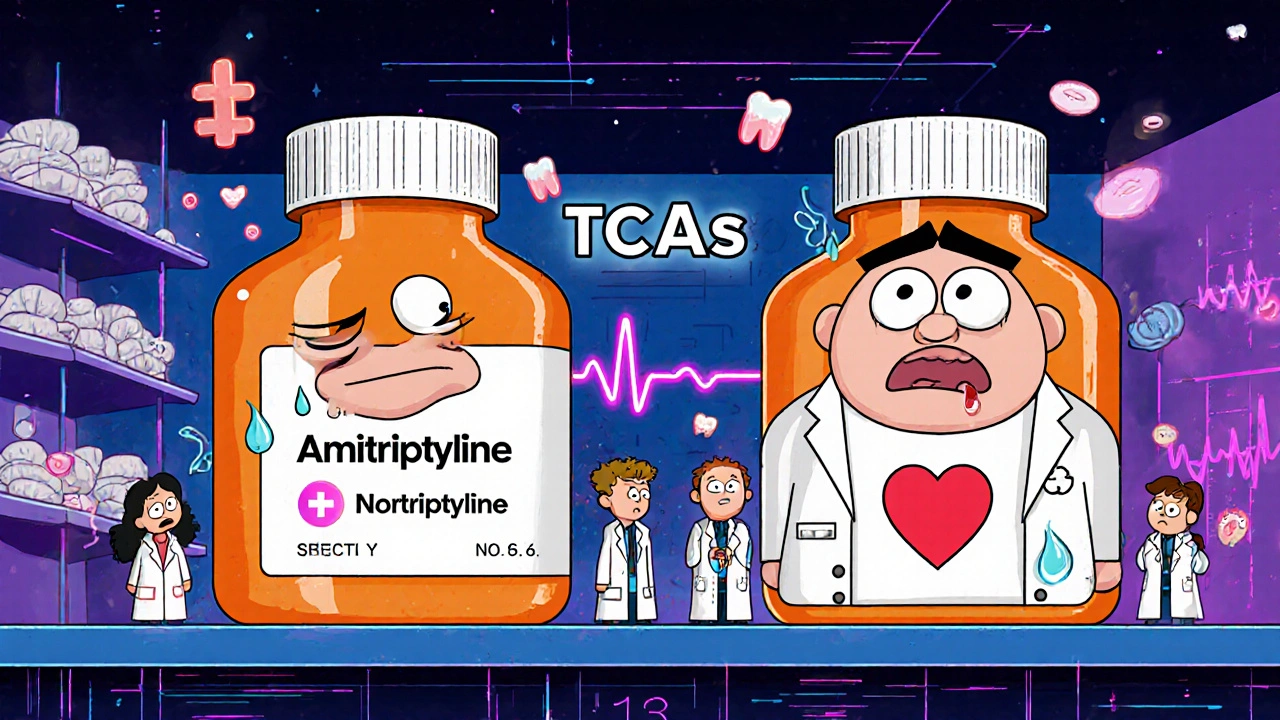
Tricyclic Antidepressant Side Effects: Amitriptyline, Nortriptyline, and Other TCAs Explained
Tricyclic antidepressants like amitriptyline and nortriptyline are still used for chronic pain and treatment-resistant depression, but they come with serious side effects including dry mouth, dizziness, heart risks, and cognitive decline-especially in older adults.