Pet Eye Infection Treatment: Common Causes, Signs, and Safe Remedies
When your dog or cat keeps rubbing their eye, squinting, or has discharge that looks like pus or mucus, it’s likely a pet eye infection treatment, a common condition in dogs and cats caused by bacteria, viruses, allergies, or foreign objects. Also known as conjunctivitis in pets, it’s not just annoying—it can lead to permanent damage if ignored. Unlike human eye infections, pet cases often come with extra complications: fur irritation, scratched corneas, or underlying issues like dry eye or eyelid abnormalities.
Dog eye infection, often triggered by pollen, dust, or bacteria like Staphylococcus, is more common in breeds with flat faces like Pugs or Bulldogs. Cat eye infection, on the other hand, frequently stems from feline herpesvirus, especially in stressed or multi-cat households. These aren’t just "pink eye" copies—they need different approaches. You can’t use human eye drops on pets. Many contain steroids or preservatives that can burn their delicate corneas or make the infection worse. Even something as simple as a grass seed stuck under the eyelid can cause a serious infection if not removed properly. That’s why home remedies like tea bags or milk aren’t safe solutions—they might seem gentle, but they don’t address the root cause. A vet will check for ulcers with a special dye, test for viruses, and rule out glaucoma or dry eye before prescribing anything. Antibiotic eye drops like terramycin or ciprofloxacin are often needed, but only after diagnosis. For viral cases, antiviral ointments or immune boosters might be used. Allergies? That’s where antihistamine drops or environmental changes come in.
Some pet owners wait too long because they think it’s just "a little redness." But if your pet’s eye is cloudy, bulging, or they’re holding it shut, that’s an emergency. Untreated infections can lead to blindness—even in just a few days. The good news? Most cases clear up fast with the right treatment. You’ll see improvement in 2–5 days if you follow the vet’s instructions. Keep the area clean with a damp cloth, use an Elizabethan collar if needed to stop scratching, and never skip doses. Prevention matters too: trim hair around the eyes, wipe away tear stains daily, and avoid letting pets stick their heads out of car windows.
Below, you’ll find real-world guides from pet owners and vets on how to recognize early signs, what medications actually work, when to skip the vet (and when you absolutely shouldn’t), and how to prevent future flare-ups. Whether you’re dealing with a stubborn case of conjunctivitis or just want to know what to watch for, these posts give you clear, no-fluff advice you can use right away.
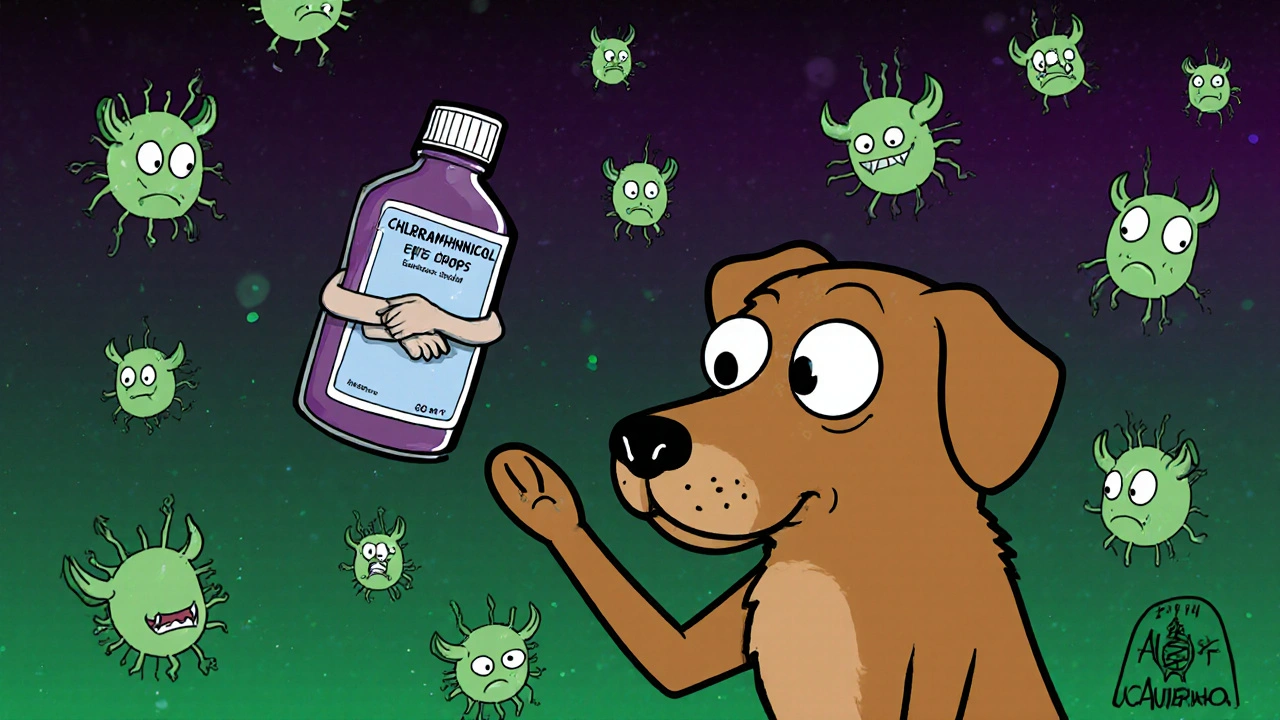
Chloramphenicol for Pet Eye Infections: What Pet Owners Need to Know
Chloramphenicol is a common antibiotic used to treat bacterial eye infections in dogs and cats. Learn how it works, when it's safe to use, potential risks, and what alternatives exist - all based on current veterinary practice.