Potassium Replacement Guide for Heart Failure
Why Diuretics Are Essential - and Risky - in Heart Failure
Diuretics are the go-to treatment for heart failure patients who are swollen, short of breath, or struggling with fluid buildup. Loop diuretics like furosemide, bumetanide, and torsemide work fast to flush out excess fluid by blocking salt reabsorption in the kidneys. But here’s the catch: every time you pull out salt, you pull out potassium too. That’s why nearly 1 in 3 heart failure patients on loop diuretics end up with low potassium - a condition called hypokalemia.
Low potassium isn’t just a lab number. It’s dangerous. When potassium drops below 3.5 mmol/L, the heart’s electrical system becomes unstable. In patients with damaged heart muscle, this can trigger deadly arrhythmias. Studies show these patients have a 1.5 to 2 times higher risk of dying. And the worse the heart failure, the more likely this is to happen.
How Diuretics Steal Potassium - And Why It Gets Worse Over Time
Loop diuretics act high up in the kidney, in the loop of Henle. They stop sodium, chloride, and potassium from being reabsorbed. That extra sodium ends up in the lower part of the kidney, where it forces more potassium out through the urine. It’s a direct line from drug to potassium loss.
But here’s something many don’t realize: the body fights back. After the first dose, the kidneys start holding onto sodium again. This is called ‘within-dose diuretic tolerance.’ That means the same dose works less and less over time - so doctors often increase it. And higher doses mean more potassium loss. It’s a vicious cycle.
Some patients take diuretics once a day. That creates big spikes and drops in potassium levels. Giving the same total dose twice a day - say, 20 mg in the morning and 20 mg in the afternoon - smooths out those swings. It’s a simple trick that reduces the risk of sudden drops.
What’s the Right Potassium Level? And When Should You Worry?
The target range for potassium in heart failure patients is 3.5 to 5.5 mmol/L. That’s wider than the normal range for healthy people. Why? Because too high is also dangerous - especially if someone is on a mineralocorticoid receptor antagonist (MRA) like spironolactone.
If potassium is between 3.0 and 3.5 mmol/L, start with oral potassium chloride. Most patients need 20 to 40 mmol per day, split into two doses to avoid stomach upset. If it’s below 3.0 mmol/L, you’re in emergency territory. That’s when you need IV potassium, given slowly (no more than 10-20 mmol per hour), with continuous heart monitoring. Never give it fast. You can stop a heart that way.
Don’t wait for symptoms. Many patients feel fine even when potassium is dangerously low. That’s why regular blood tests are non-negotiable. Check potassium weekly when starting or changing diuretics. Once stable, monthly is fine - unless something changes, like a hospital admission or a new medication.

How to Fix It Without Stopping Diuretics
You can’t just stop diuretics. Fluid overload kills faster than low potassium. So the goal isn’t to avoid diuretics - it’s to manage them smarter.
The best tool you have is a mineralocorticoid receptor antagonist (MRA). Spironolactone and eplerenone block the hormone aldosterone, which is the main driver of potassium loss. The RALES trial showed spironolactone cut death risk by 30% in advanced heart failure - partly because it kept potassium stable. Start low: 12.5 mg of spironolactone or 25 mg of eplerenone daily. Don’t go higher unless you need to, and always check potassium after two weeks.
Another option? SGLT2 inhibitors. Drugs like dapagliflozin and empagliflozin were originally for diabetes, but they’ve become game-changers in heart failure. They reduce fluid buildup without touching potassium. In fact, they lower diuretic needs by 20-30%. That means less potassium loss overall. The guidelines now say all heart failure patients - even those with preserved ejection fraction - should be on one if they can tolerate it.
What Else Can Worsen Low Potassium?
It’s not just the diuretic. Other things chip away at potassium levels:
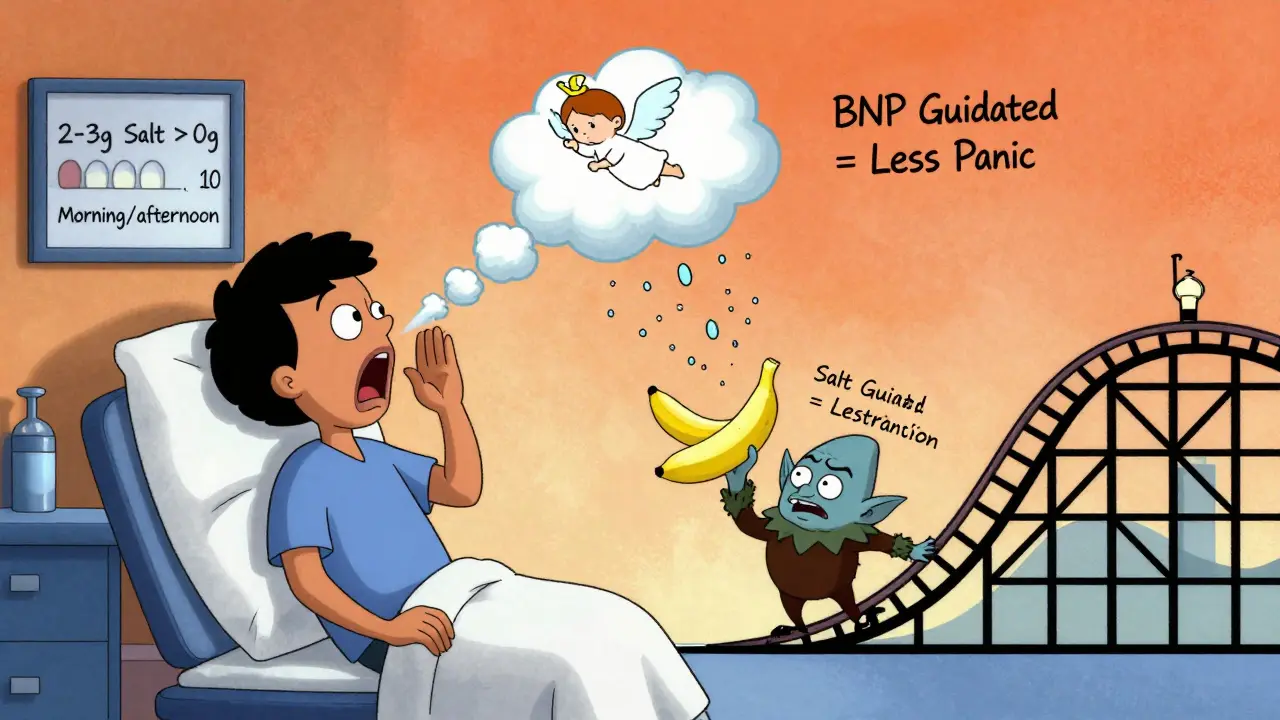
- Salt restriction: Too little salt (under 2 grams a day) makes the body release more aldosterone, which pushes out even more potassium. Aim for 2-3 grams - not zero.
- Other meds: Laxatives, steroids, and certain antibiotics (like amphotericin B) can worsen hypokalemia. Review every pill a patient takes.
- Thiazide diuretics: Sometimes doctors add metolazone to boost diuresis. But it’s a potassium thief. If you use it, expect to increase potassium replacement.
- Poor diet: Many heart failure patients eat processed food. They’re low in potassium-rich foods like spinach, beans, potatoes, and bananas. A simple dietary nudge helps.
Special Cases: HFpEF, Kidney Problems, and Hospitalized Patients
Heart failure with preserved ejection fraction (HFpEF) behaves differently. These patients often have more kidney problems and respond less predictably to diuretics. Aggressive fluid removal can hurt their kidneys without helping symptoms. That means you need to be even more careful with potassium. Don’t push doses too high.
If a patient has chronic kidney disease (CKD), their kidneys can’t excrete potassium well - so they’re more likely to get high potassium. But they’re also on diuretics. That’s a tightrope walk. MRAs and SGLT2 inhibitors help here too, but you need to monitor even more closely.
In the hospital, during acute decompensation, potassium can crash fast. Check it every 1-3 days. Don’t wait. Adjust diuretics and potassium replacement daily. Use IV potassium if needed, but always with an ECG monitor.
What’s New in 2026? The Future of Diuretic Management
Extended-release diuretics are coming. These release the drug slowly over 12-24 hours, reducing the spikes that cause potassium swings. Early studies show they lower hypokalemia rates by up to 20% compared to standard furosemide.
Biomarker-guided dosing is another shift. Instead of guessing based on weight or symptoms, doctors now use BNP or NT-proBNP levels to guide diuretic doses. One study showed this approach cut hypokalemia episodes by 15-20%. It’s not standard everywhere yet - but it’s coming.
And while potassium binders like patiromer are mainly used for high potassium, they might one day help fine-tune levels in patients who keep bouncing between low and high. That’s still experimental.
Bottom Line: Five Rules to Follow
- Always check potassium before starting diuretics - and then weekly until stable.
- Add an MRA (spironolactone or eplerenone) for all HFrEF patients unless contraindicated.
- Use SGLT2 inhibitors (dapagliflozin or empagliflozin) for all eligible patients - they protect the heart and stabilize potassium.
- Split daily diuretic doses to avoid sharp potassium drops.
- Don’t over-restrict salt. 2-3 grams per day is enough. More potassium-rich foods help too.
Diuretics save lives. But they’re not harmless. The key isn’t avoiding them - it’s managing them with precision. When you balance fluid removal with potassium protection, you don’t just prevent arrhythmias. You give patients more time - and better quality of life.