OCD Medication: What Works, What to Watch For, and Real Options
When you're stuck in loops of intrusive thoughts or compulsive behaviors, OCD medication, prescription drugs designed to reduce obsessive-compulsive symptoms by balancing brain chemicals like serotonin. Also known as anti-OCD drugs, these aren't quick fixes—they're tools that help rewire how your brain responds to fear and uncertainty. Many people think OCD is just about being neat or organized, but it's a neurological condition that can feel like your mind is trapped on repeat. Medication doesn't erase thoughts, but it can turn down the volume so you can actually use therapy and coping skills to break free.
Most first-line SSRIs, selective serotonin reuptake inhibitors that increase serotonin availability in the brain to reduce OCD symptoms like sertraline, fluoxetine, and escitalopram are the go-to. They don’t work for everyone, but studies show about 40–60% of people see real improvement after 8–12 weeks. Doses for OCD are often higher than for depression, and patience matters—you might need to try a few before finding the right one. If SSRIs alone aren’t enough, doctors sometimes add a low-dose antipsychotic, medications like risperidone or aripiprazole used off-label to boost SSRI effects in treatment-resistant OCD. This isn’t because you have psychosis—it’s because these drugs help fine-tune brain circuits that SSRIs alone can’t fully reach.
Side effects are real but manageable. Nausea, sleep changes, and sexual dysfunction are common early on, but they often fade. Weight gain and emotional blunting are concerns too, but they’re not universal. What matters most is tracking progress—not just symptom reduction, but whether you’re regaining control over your daily life. You’re not just taking pills to feel "less anxious"; you’re building space to do the hard work of exposure therapy without being overwhelmed.
There’s no magic bullet, but there are proven paths. The posts below show real comparisons: which drugs work best for whom, how to handle side effects, what happens when meds stop working, and how some people use supplements or off-label options to fill gaps. You’ll see what works in practice—not just what’s listed in brochures. This isn’t about guessing. It’s about knowing what’s out there, and what might finally give you back your time.
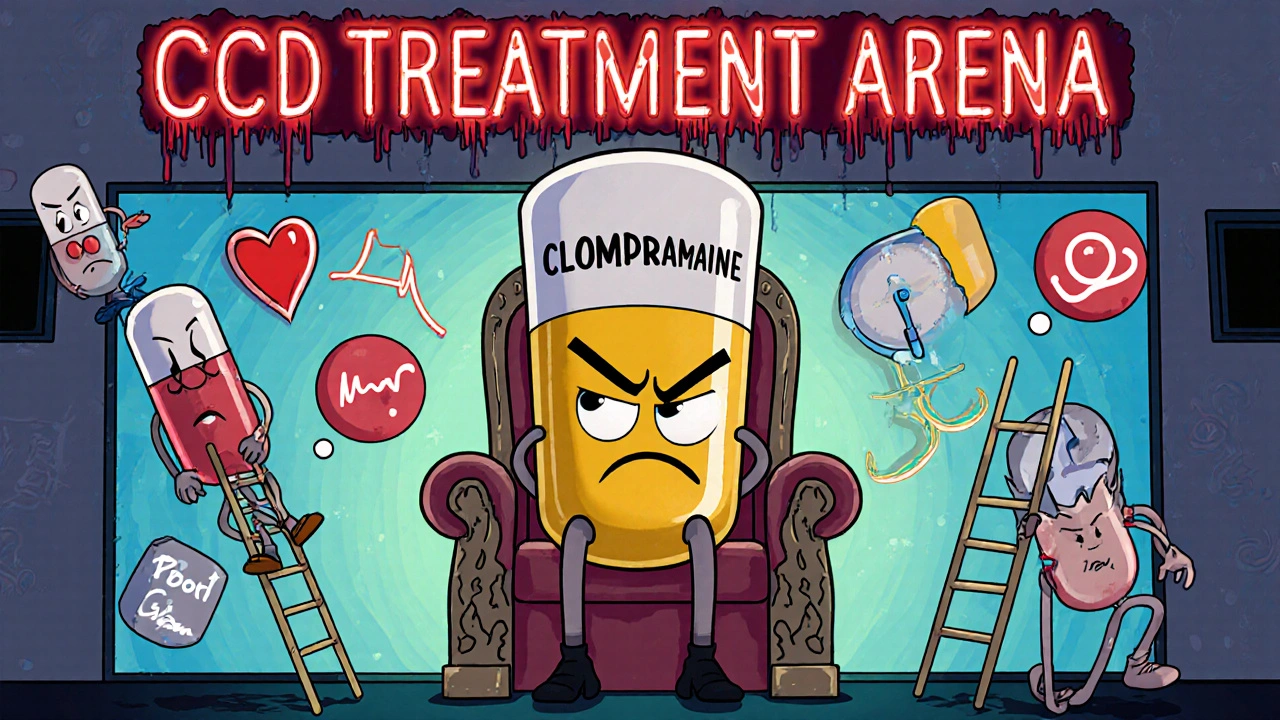
Compare Clofranil (Clomipramine) with Alternatives for OCD and Depression
Clofranil (clomipramine) is effective for OCD and depression but has significant side effects. Learn how SSRIs, SNRIs, and therapy compare as safer, nearly as effective alternatives.