Inhaler Use: How to Use Your Inhaler Correctly and Avoid Common Mistakes
When you rely on an inhaler use, a device that delivers medication directly to the lungs for conditions like asthma or COPD. Also known as metered-dose inhaler, it’s one of the most common tools for managing breathing problems—but only if you use it right. Many people think their inhaler isn’t working because their symptoms don’t improve. But the problem isn’t the medicine—it’s how they’re using it. Studies show over half of asthma and COPD patients use their inhalers incorrectly, which means they’re getting less than half the dose they’re supposed to. That’s not just ineffective—it’s dangerous.
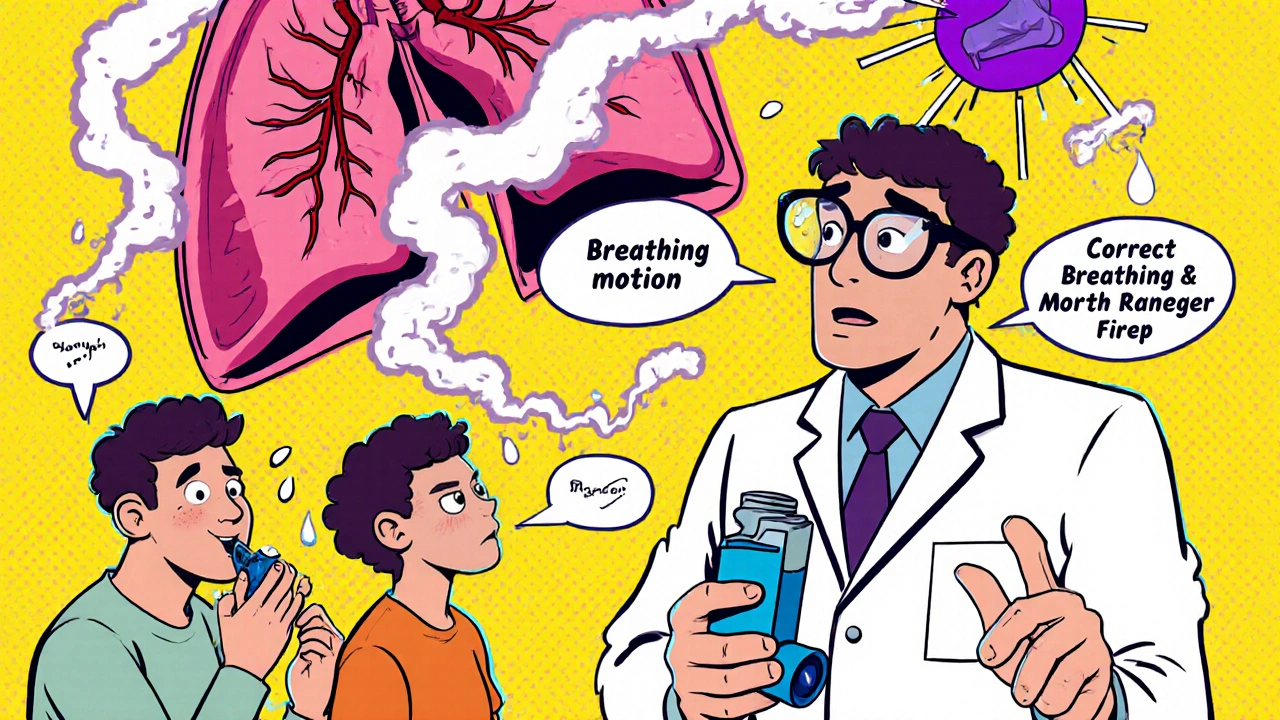
One of the biggest mistakes? Not breathing in at the right time. You press the canister and breathe in too early, or too late, or not deep enough. Some people hold the inhaler too far from their mouth, like they’re spraying perfume. Others skip the spacer device, a tube that holds the medicine so you can breathe it in slowly and evenly, even though it makes the inhaler twice as effective, especially for kids and older adults. And then there’s the habit of not rinsing your mouth after using steroid inhalers, which leads to thrush, hoarseness, and other avoidable side effects. These aren’t small details—they’re critical steps that make the difference between feeling better and staying sick.
It’s not just about technique. You also need to know when your inhaler is empty. Some people shake it or look at the float, but those tricks don’t work. The only reliable way? Count your puffs. If your inhaler says 200 doses and you use two a day, it’ll last 100 days. Mark your calendar. Write it on the canister. Don’t wait until you’re gasping to realize you’re out. And don’t assume your doctor checked your technique during your last visit—they probably didn’t. Most appointments are too short. You need to practice on your own, maybe even film yourself with your phone and compare it to a video from a trusted source like the American Lung Association.
The good news? Getting it right is simple once you know how. It’s not about memorizing steps—it’s about building a habit. Breathe out first. Put the mouthpiece in. Press and breathe in slow and deep. Hold your breath for five seconds. Wait a full minute between puffs. Rinse. Repeat. It takes less than a minute, but it can change your whole day. And if you’re using a dry powder inhaler instead of a spray, the rules change again. No need to coordinate your breath with a button press—you just inhale fast and hard. But if you breathe too slowly, the medicine gets stuck in your throat. One method doesn’t fit all.
Below, you’ll find real guides from people who’ve been there—how to read labels to know which inhaler you have, how to handle emergencies when your inhaler fails, how to talk to your pharmacist about alternatives, and what to do when side effects kick in. These aren’t theory pieces. They’re practical fixes from real users and clinicians who’ve seen what works—and what doesn’t—when lives depend on a few seconds of proper inhaler use.
How to Improve Adherence for Inhalers, Patches, and Injectables
Learn practical, evidence-based ways to improve adherence for inhalers, patches, and injectables. From smart devices to simple routines, discover what actually works to stay on track with your medication.