Hypertensive Crisis: What It Is, How It Happens, and What to Do
When your blood pressure shoots up to dangerous levels—usually above 180/120 mm Hg—you’re facing a hypertensive crisis, a sudden, severe increase in blood pressure that can damage organs and lead to stroke, heart attack, or kidney failure. Also known as hypertensive emergency, it’s not just a high reading—it’s a medical alarm that demands immediate attention. This isn’t the same as everyday high blood pressure. A hypertensive crisis happens fast, often without warning, and can turn deadly in hours if ignored.
What causes it? Often, it’s missed or poorly managed high blood pressure, a chronic condition where force against artery walls stays too high over time. People stop taking meds, skip doctor visits, or suddenly use substances like cocaine or amphetamines. Some develop it after stopping beta-blockers too quickly. Even severe stress, kidney disease, or pregnancy complications like preeclampsia can trigger it. The real danger isn’t just the number on the monitor—it’s what happens inside your body. Blood vessels can tear, the heart can strain past its limit, or fluid can flood the lungs. Brain swelling, vision loss, chest pain, or confusion are red flags you can’t afford to ignore.
Most people don’t realize they’re in danger until symptoms hit. That’s why knowing the signs matters. Headache, blurred vision, nausea, shortness of breath, or chest tightness aren’t just inconveniences—they could be your body screaming for help. If you’ve been told you have high blood pressure and suddenly feel this way, don’t wait. Call emergency services. Don’t try to drive yourself. Don’t wait to see if it gets better. Every minute counts. Emergency teams use fast-acting IV meds to lower pressure safely, avoiding shock to your system. It’s not about bringing the number down fast—it’s about bringing it down smart.
You’ll find articles here that cover what to do when meds go wrong, how to spot hidden triggers, and how to avoid the next crisis. Some posts show you how to read your prescription label to prevent dangerous mistakes. Others explain how drug interactions can push your pressure into danger. You’ll also see how tools like interaction checkers help you stay safe, and how certain meds—like those for Parkinson’s or eye infections—can unexpectedly affect your blood pressure. This isn’t just about numbers. It’s about understanding your body’s signals, knowing when to act, and using your meds right so you don’t end up in the ER.
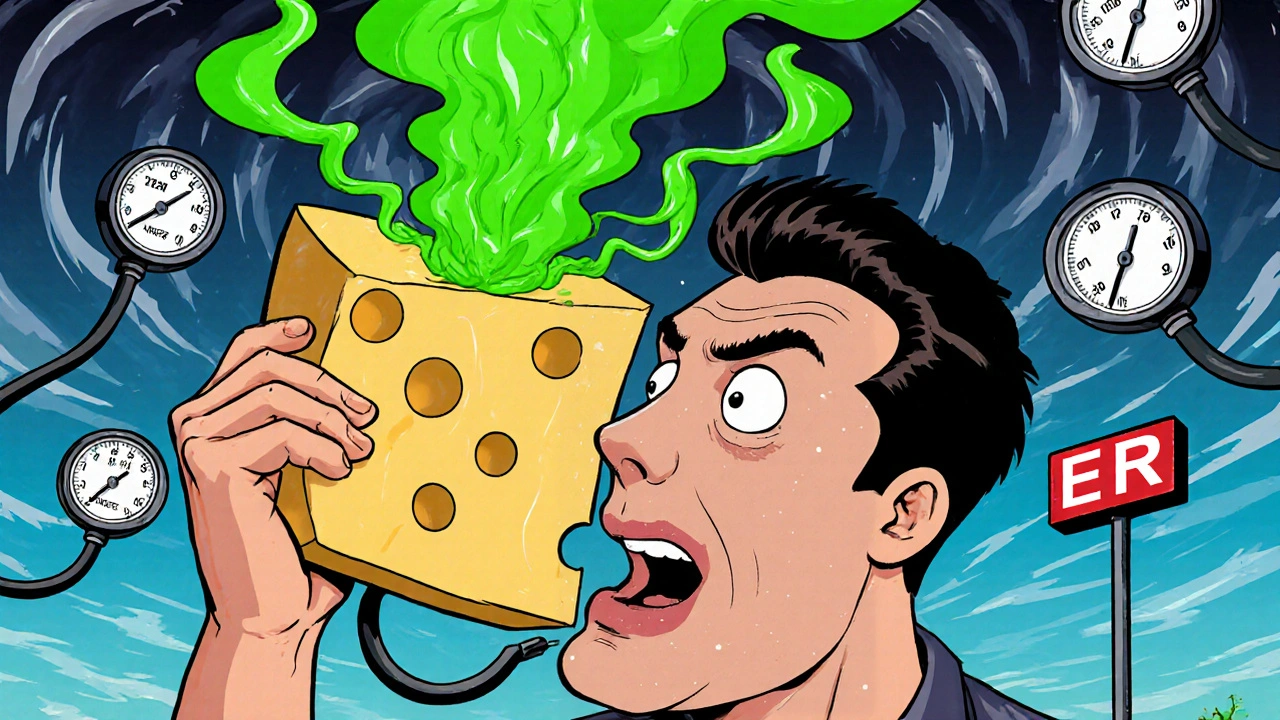
Aged Cheeses and Processed Meats: Dangerous Interactions with MAOI Medications
Aged cheeses and processed meats contain tyramine, which can cause life-threatening blood pressure spikes in people taking MAOI antidepressants. Learn which foods to avoid, safe alternatives, and how to manage this dangerous interaction.