Antibiotic Interaction: What You Need to Know About Dangerous Drug Combos
When you take an antibiotic interaction, a harmful reaction that happens when antibiotics mix with other drugs, foods, or supplements. It's not just about side effects—it's about life-threatening changes in how your body processes medicine. This isn't rare. One in five people on antibiotics also take another drug that can clash with it. The result? Reduced effectiveness, organ stress, or even sudden spikes in blood pressure or heart rhythm problems.
Think of your body like a busy highway. Antibiotics are one set of vehicles. Other meds—like blood thinners, antidepressants, or even heart meds—are others. When they cross paths unexpectedly, traffic jams happen. For example, mixing certain antibiotics with antidepressants, medications that affect brain chemicals like serotonin can trigger serotonin syndrome, a condition that causes confusion, rapid heartbeat, and fever. Or pairing antibiotics with blood thinners, drugs that prevent clots but can become dangerously strong when antibiotics interfere might lead to uncontrolled bleeding. Even something as simple as fiber supplements, common remedies for constipation that can block antibiotic absorption can make your treatment useless if taken at the wrong time.
It’s not just about pills. Some food-drug interactions, harmful combos between medications and what you eat are just as dangerous. Aged cheeses, cured meats, and even some wines can trigger a deadly spike in blood pressure when taken with certain antibiotics—especially if you're also on an older type of antidepressant. These aren’t myths. They’re documented cases that show up in emergency rooms every year.
Pharmacists are your first line of defense. They don’t just count pills—they check every combo you’re taking. In fact, medication therapy management, a service where pharmacists review all your drugs to find hidden risks is built around catching these exact problems before they hurt you. Many people don’t realize their pharmacist can spot an antibiotic interaction that their doctor missed—especially if they’re juggling multiple prescriptions.
You don’t need to memorize every possible combo. But you do need to know how to ask the right questions. What foods should I avoid? Could this interact with my blood pressure pill? Is it safe to take with my daily vitamin? These aren’t silly questions—they’re survival questions. And the answers aren’t hidden in fine print. They’re in your medication guide, your pharmacy’s counseling session, or even a quick call to your pharmacist.
Below, you’ll find real-world guides on how to spot dangerous combinations, how to use drug checkers safely, what to keep in your emergency kit, and how to talk to your pharmacist about interactions that could save your life. No fluff. No guesswork. Just what works.
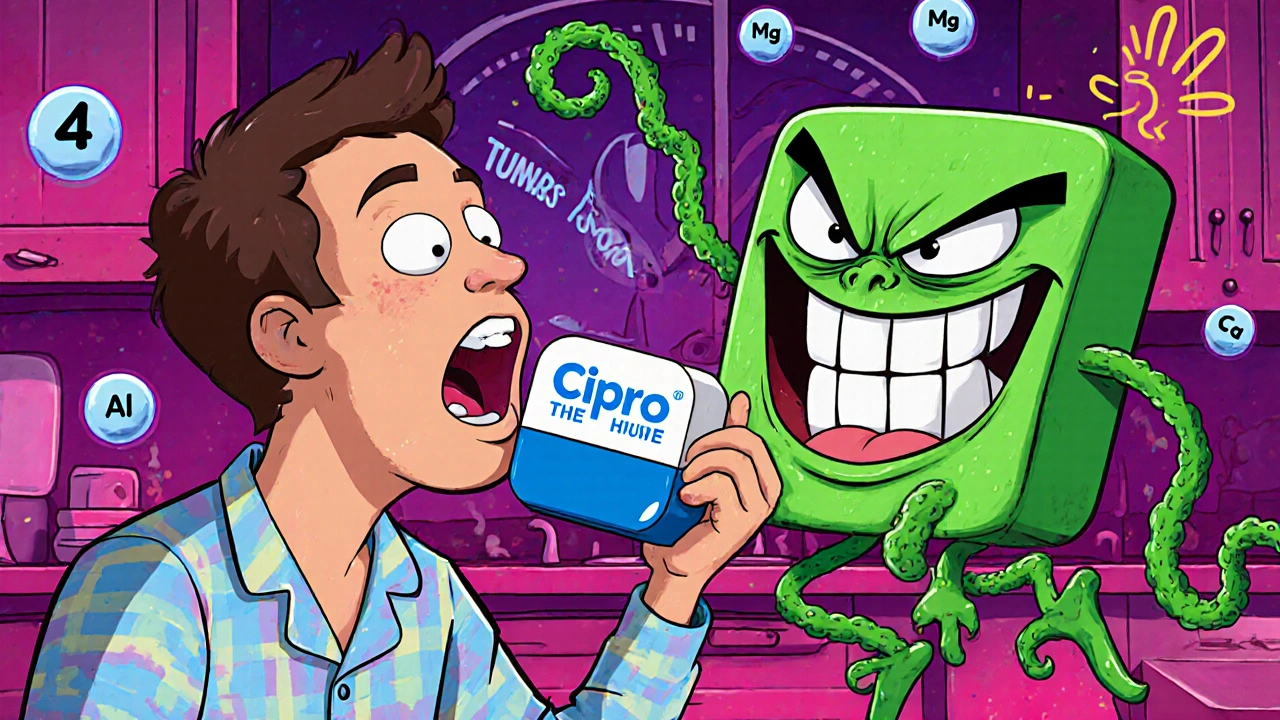
Antacids and Antibiotics: How to Time Your Doses to Avoid Dangerous Interactions
Taking antacids with antibiotics like ciprofloxacin or doxycycline can reduce their effectiveness by up to 90%. Learn the exact timing rules to avoid treatment failure and antibiotic resistance.