Allergy Relief Strategy Finder
Describe Your Symptoms & Needs
Select all options that apply to you.
This tool compares Nasal Antihistamines against Steroids, Oral Pills, and Decongestants based on the article's clinical data to find your best match.
Does your nose start running the moment you step outside during pollen season? You aren't alone. Millions of people deal with allergic rhinitis every year, but many find that oral pills make them too drowsy to function at work or school. That is where nasal antihistamine sprays come in. These medications deliver medicine directly to the nasal passages, blocking histamine receptors right where the trouble starts. Unlike steroid sprays that take days to work, these sprays can stop a runny nose within minutes. But they come with a catch: a bitter taste and potential irritation. Let's break down what works, what doesn't, and how to use them without hating the experience.
How Nasal Antihistamines Work Differently
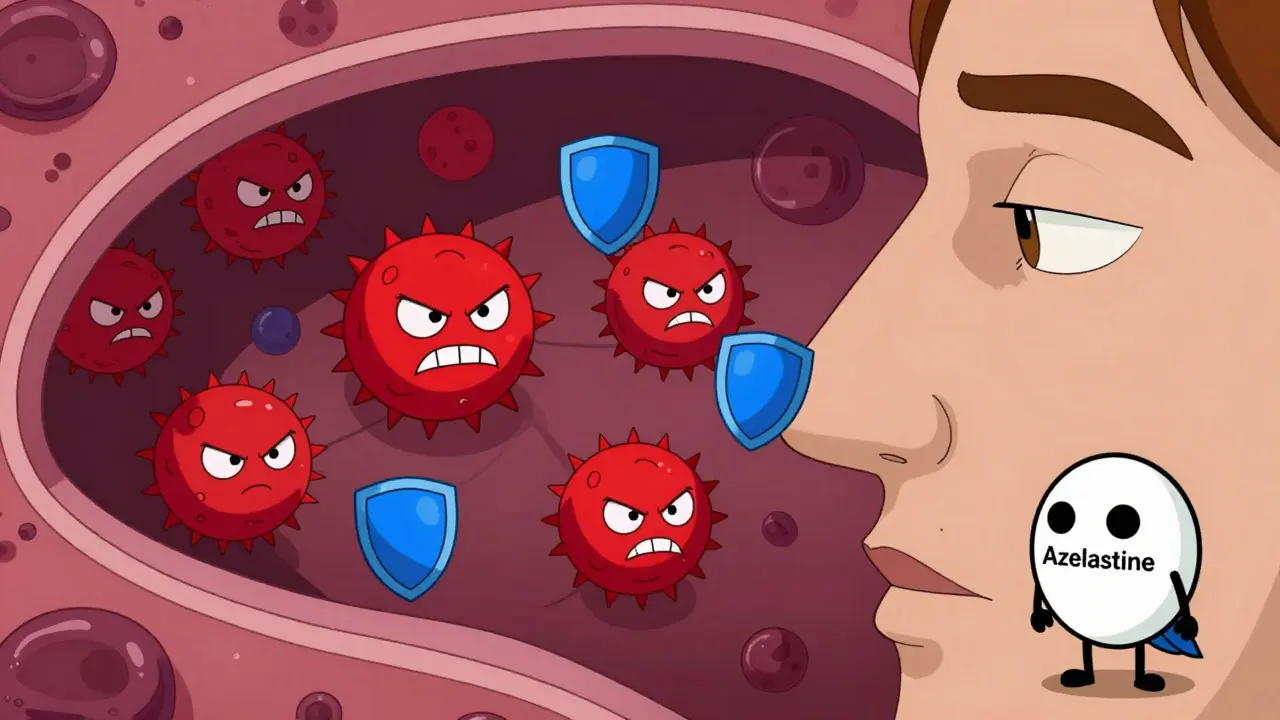
To understand why these sprays are effective, you need to know what happens during an allergic reaction. When your body detects an allergen like dust mites or pet dander, it releases histamine, a chemical that triggers sneezing, itching, and a runny nose. Oral antihistamines travel through your entire bloodstream to block this chemical. Nasal antihistamines skip the middleman. They go straight to the site of inflammation.
The two most common active ingredients are azelastine hydrochloride (found in Astelin and Astepro) and olopatadine hydrochloride (found in Patanase). Azelastine acts as a selective H1-receptor antagonist. This means it physically blocks histamine from binding to cells in your nose. It also has mild mast cell stabilizing properties, which helps prevent further release of inflammatory chemicals. Because the medication stays local, you often get faster relief than with pills, and you avoid systemic side effects like extreme drowsiness, although some users still report feeling slightly tired.
Key Benefits Over Other Allergy Treatments
Why choose a spray over a pill or a steroid spray? Speed and targeting are the main reasons. Here is how nasal antihistamines stack up against other common treatments:
| Treatment Type | Onset of Action | Best For | Main Drawback |
|---|---|---|---|
| Nasal Antihistamines (e.g., Astepro) | 15-30 minutes | Runny nose, sneezing, itching | Bitter taste, nasal burning |
| Corticosteroid Sprays (e.g., Flonase) | 3-4 days for full effect | Nasal congestion, long-term inflammation | Slow onset, requires daily consistency |
| Oral Antihistamines (e.g., Zyrtec) | 1 hour | Whole-body symptoms (eyes, skin) | Drowsiness, dry mouth |
| Decongestant Sprays (e.g., Afrin) | Minutes | Severe congestion | Rebound congestion if used >3 days |
Nasal antihistamines shine when you need immediate relief from a watery nose. Studies show they reduce nasal allergy symptoms by 70-80% compared to placebo. However, they are not the best solo player for severe congestion. If your nose is completely blocked, a corticosteroid spray like fluticasone might be more effective because it reduces swelling over time. Many experts recommend combining both for comprehensive control.
Common Side Effects and How to Manage Them
No medication is perfect, and nasal antihistamines have a distinct side effect profile. The most famous complaint is the bitter taste. About 30-40% of users report this. Why does it happen? The spray drains down the back of your throat into the nasopharynx, where taste buds detect the medication. It tastes metallic or extremely bitter.
Other common side effects include:
- Nasal burning or stinging: Experienced by about 25% of first-time users. This usually fades after a few days of consistent use.
- Nosebleeds: Occurs in roughly 15% of users, often due to incorrect spraying technique hitting the sensitive septum (the wall between nostrils).
- Drowsiness: While less common than with oral antihistamines, some people still feel sleepy, especially with higher prescription doses.
Don't let the bitter taste scare you off. There are practical tricks to minimize it. Aim the spray away from the center of your nose toward the outer ear on the same side. This keeps the medication on the lateral nasal wall and away from the drainage path to the throat. Also, try not to swallow immediately after spraying. Wait a few minutes, then drink something citrus-flavored like orange juice to mask any lingering aftertaste.
Proper Administration Technique
Using these sprays correctly makes a huge difference in both effectiveness and comfort. Most users fail because they aim straight up or hit the septum. Follow these steps for best results:
- Prime the pump: Before your first use, depress the pump 5-6 times until a fine mist appears. This ensures accurate dosing.
- Shake well: Shake the bottle gently before each application to mix the solution.
- Blow your nose: Clear out excess mucus so the medication can reach the tissue.
- Aim outward: Tilt your head slightly forward. Insert the nozzle into one nostril and aim toward the outer corner of your eye or ear. Never aim straight back or at the septum.
- Spray and breathe: Spray once while breathing in gently through your nose. Do not sniff hard, as this pulls the medication down your throat.
- Repeat: Repeat for the other nostril. Standard dosage is usually two sprays per nostril, once or twice daily depending on the product.
If you experience burning, try using a saline nasal rinse 15 minutes before applying the antihistamine. Moistening the nasal passages can reduce irritation significantly. Consistency is key-while relief starts quickly, peak effectiveness often takes 3-4 days of regular use.

When to Choose Nasal Antihistamines
Not everyone needs a nasal antihistamine. They are particularly useful for specific scenarios. Consider them if:
- You suffer from predominantly runny nose and sneezing rather than just congestion.
- Oral antihistamines make you too drowsy to drive or work.
- You need fast-acting relief for intermittent seasonal allergies.
- You haven't found enough relief from steroid sprays alone.
They may be less ideal if you have severe perennial (year-round) allergies with heavy congestion, or if you cannot tolerate the bitter taste despite trying mitigation strategies. In those cases, a combination product like Dymista (which mixes azelastine and fluticasone) might offer better overall symptom control by addressing both inflammation and histamine response simultaneously.
Cost and Accessibility
Availability varies by region. In the United States, Astepro Allergy (0.1% azelastine) is available over-the-counter, costing around $25-$35 per bottle. Prescription versions like Astelin (0.15%) are stronger but can cost upwards of $300 without insurance. Generic options are becoming more common, helping to lower prices. Always check with your pharmacist for store-brand equivalents, which can save money without sacrificing efficacy. Remember that insurance coverage often favors generic formulations, so ask about prior authorization if you need a specific brand.
Do nasal antihistamine sprays cause rebound congestion?
No, nasal antihistamines do not cause rebound congestion (rhinitis medicamentosa). This condition is associated with decongestant sprays like oxymetazoline (Afrin) when used for more than three days. You can safely use nasal antihistamines for extended periods as directed by your doctor.
Can I use nasal antihistamines with steroid sprays?
Yes, and it is often recommended. Using them together provides additive benefits. Steroids reduce inflammation and congestion, while antihistamines quickly stop runny nose and sneezing. Wait at least 15 minutes between using the two different sprays to ensure each absorbs properly.
Is the bitter taste permanent?
The bitter taste itself is not permanent, but the sensation occurs every time you use the spray if it drains to your throat. However, many users report that the intensity of the taste diminishes as they master proper aiming techniques. Newer formulations with encapsulation technology are also being developed to reduce this issue.
Are nasal antihistamines safe for children?
Safety depends on the specific product and age. Azelastine nasal spray is generally approved for children aged 6 and older. Olopatadine may have different age restrictions. Always consult a pediatrician before giving any nasal spray to a child, as dosing and administration techniques differ for smaller nasal passages.
How long does it take for nasal antihistamines to work?
You should feel relief within 15 to 30 minutes of application. This is much faster than oral antihistamines or steroid sprays. However, for maximum benefit, consistent use over 3-4 days is recommended to maintain stable levels of the medication in your nasal tissues.