Processed Meats: Risks, Alternatives, and What You Need to Know
When you see processed meats, meats that have been modified through salting, curing, fermenting, or smoking to improve flavor or preservation. Also known as cured meats, they include bacon, hot dogs, sausages, deli ham, and pepperoni. These aren’t just convenience foods—they’re linked to real health risks, and the science isn’t vague. The World Health Organization classifies them as Group 1 carcinogens, meaning there’s strong evidence they cause colorectal cancer. That’s the same category as tobacco and asbestos—not because they’re equally dangerous, but because the link is clear and consistent.
What makes them risky? It’s mostly the additives. nitrates, chemicals added to preserve color and prevent botulism. Also known as nitrites, they turn into nitrosamines during cooking or digestion—compounds that damage DNA in the gut lining. Salt levels are another issue. A single serving of deli turkey can have more sodium than a bag of chips. And let’s not forget the cooking method: charring or grilling at high heat creates more harmful compounds. These aren’t theoretical concerns. Studies tracking over 1 million people show that eating just 50 grams of processed meat daily—about one hot dog or two slices of bacon—raises colorectal cancer risk by 18%.
You don’t have to quit cold turkey. Many people switch to red meat, unprocessed beef, pork, or lamb that hasn’t been cured or smoked. Also known as fresh meat, it carries lower risk when eaten in moderation. Choose lean cuts, skip the char, and pair them with vegetables. There are also better alternatives: turkey or chicken breast without added nitrates, plant-based sausages made from soy or peas, or even canned tuna and sardines for quick protein. The goal isn’t perfection—it’s reduction. Swap one processed meat meal a week for a whole-food option, and you’re already moving in the right direction.
Reading labels helps. If you see sodium nitrite, potassium nitrate, or "cured with natural celery juice"—that’s still a nitrate, even if it’s "natural." The body processes them the same way. Look for products labeled "no nitrates added" and check the sodium content. And remember, occasional use isn’t the problem. It’s daily habits that stack up.
The posts below give you real-world tools to make smarter choices. You’ll find comparisons of safer alternatives, tips for reading food labels, and how to spot hidden additives in everyday meals. Whether you’re cutting back for health reasons, managing a chronic condition, or just want to eat cleaner, these guides cut through the noise and give you clear, practical steps.
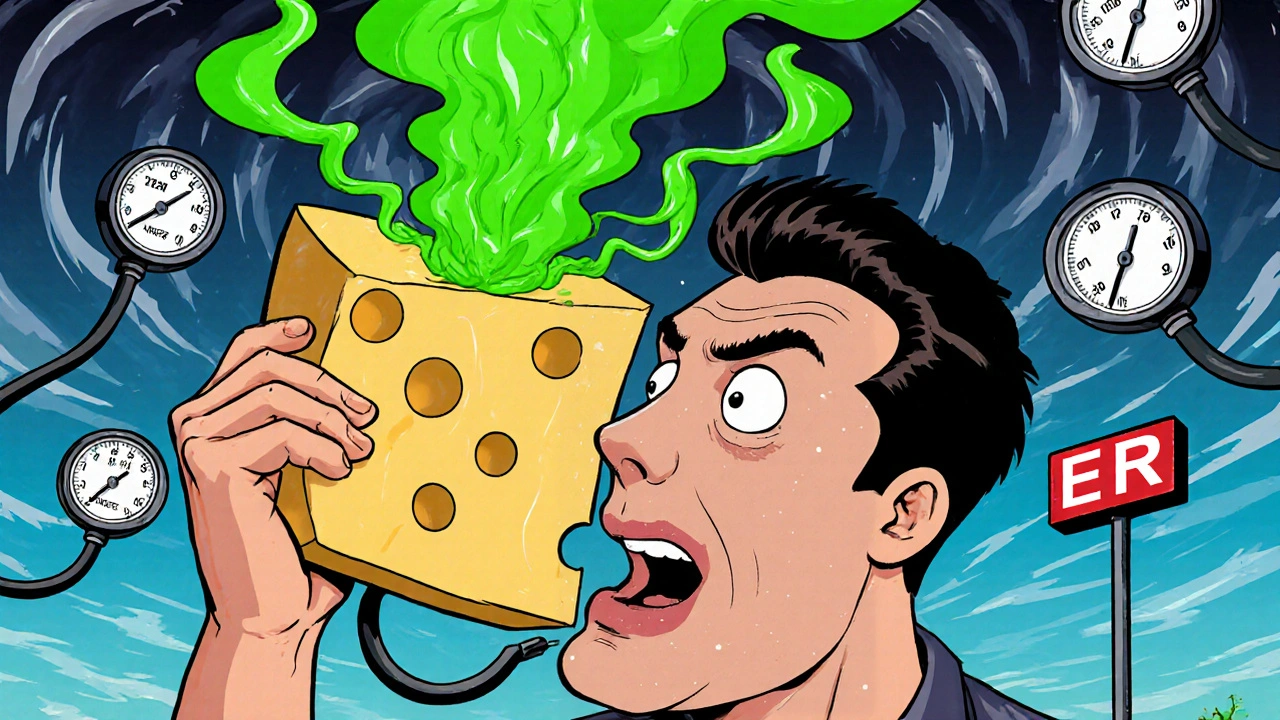
Aged Cheeses and Processed Meats: Dangerous Interactions with MAOI Medications
Aged cheeses and processed meats contain tyramine, which can cause life-threatening blood pressure spikes in people taking MAOI antidepressants. Learn which foods to avoid, safe alternatives, and how to manage this dangerous interaction.