Nortriptyline Side Effects: What You Need to Know Before Taking It
When you start taking nortriptyline, a tricyclic antidepressant used to treat depression and sometimes nerve pain. Also known as Aventyl, it works by balancing brain chemicals—but that balance can come with side effects that catch people off guard. Many assume all antidepressants feel the same, but nortriptyline has a unique profile. Unlike newer SSRIs, it doesn’t just boost serotonin—it affects norepinephrine too, which is why it helps some people who didn’t respond to other meds. But that same mechanism is why side effects like dry mouth, dizziness, and fatigue show up so often.
One of the most common complaints? A dry mouth so bad you feel like you’re chewing cotton. It’s not just annoying—it can lead to tooth decay if you don’t drink water or chew sugar-free gum. Dizziness, especially when standing up fast, is another big one. That’s because nortriptyline can lower blood pressure. People often think it’s just aging or stress, but it’s the drug. Then there’s weight gain. Not everyone gets it, but enough do that it’s a real concern for long-term users. Sleepiness? Yes. Blurred vision? Common. Constipation? Almost expected. These aren’t rare outliers—they’re the norm for about half the people who take it.
Some side effects are more dangerous. If you notice confusion, fast heartbeat, trouble urinating, or seizures, stop taking it and call your doctor. These aren’t "just side effects"—they’re red flags. And if you’ve ever had a heart problem, nortriptyline might not be the best fit. It can affect your heart’s electrical signals, which is why doctors check your EKG before and during treatment. It’s also risky if you’re over 65 or taking other meds that slow your liver’s ability to process it. That’s why checking for interactions matters. You might be on a beta-blocker, a painkiller, or even an OTC cold med—and not realize it’s making nortriptyline more powerful than it should be.
What’s surprising is how many people stop taking it because of side effects, not because it’s not working. They don’t know the first few weeks are the hardest. Many side effects fade after a month as your body adjusts. But if they don’t? That’s when you talk to your doctor about lowering the dose or switching. This isn’t about "just pushing through." It’s about finding the right balance between relief and quality of life.
You’ll find posts here that cover how to manage these effects without quitting the med—like using saline sprays for dry mouth, timing your dose to reduce dizziness, or avoiding alcohol that makes sedation worse. There’s also advice on when to call your doctor versus when to wait it out. You’ll see real stories from people who’ve been there, and practical tips that aren’t just textbook advice. This isn’t a list of scary warnings—it’s a guide to knowing what’s normal, what’s not, and how to take control without fear.
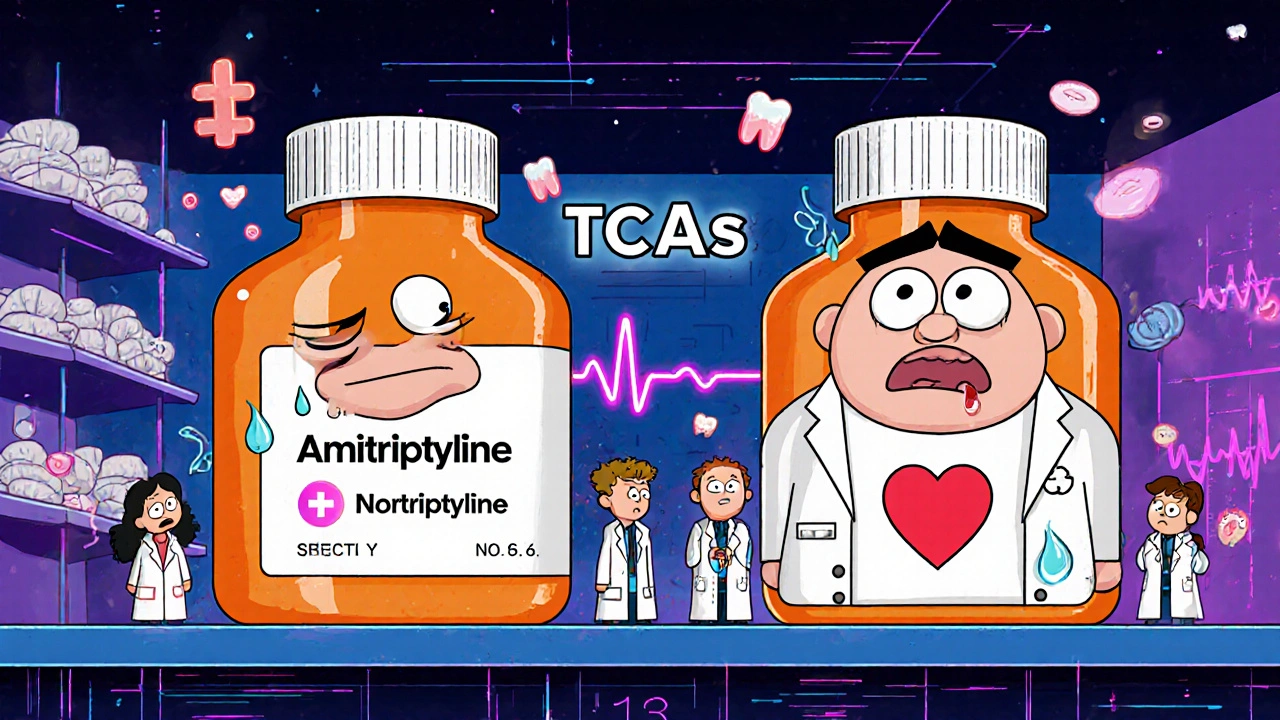
Tricyclic Antidepressant Side Effects: Amitriptyline, Nortriptyline, and Other TCAs Explained
Tricyclic antidepressants like amitriptyline and nortriptyline are still used for chronic pain and treatment-resistant depression, but they come with serious side effects including dry mouth, dizziness, heart risks, and cognitive decline-especially in older adults.