Understanding Nasal Decongestant Rebound
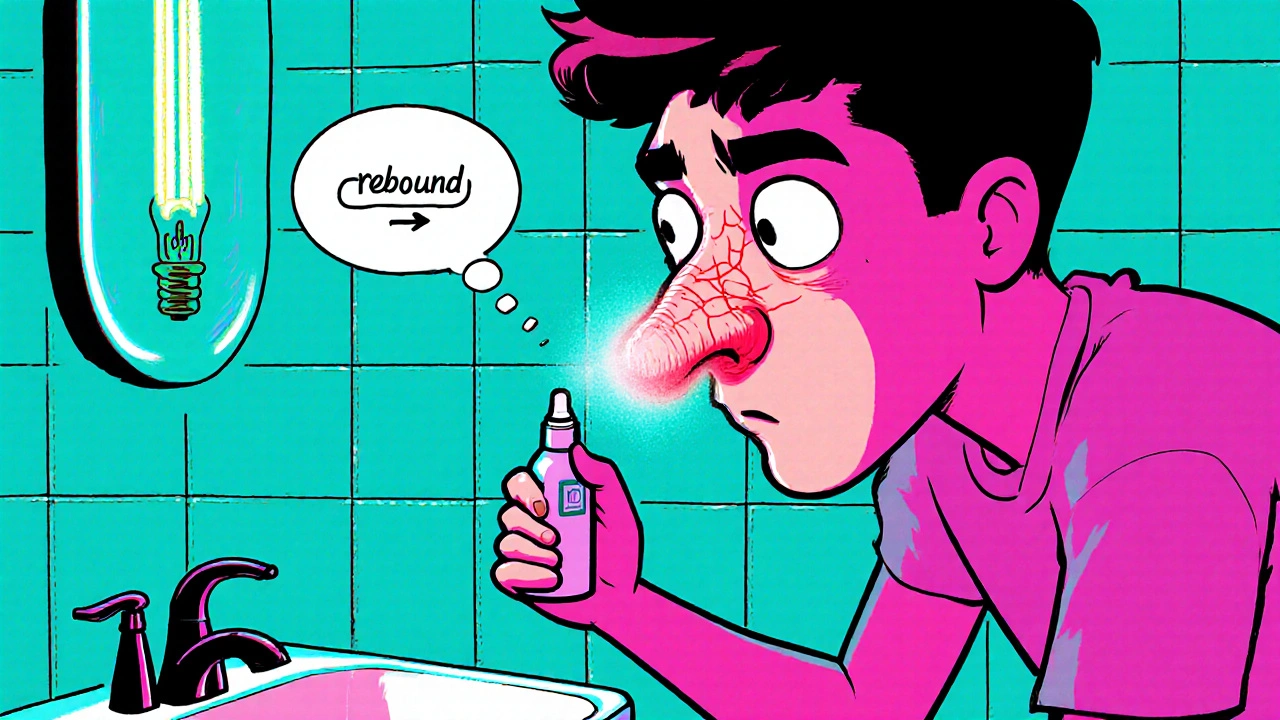
When dealing with nasal decongestant rebound, the return of nasal congestion after stopping over‑used decongestant sprays. Also known as rhinitis medicamentosa, it typically follows prolonged use of decongestant nasal spray, a medication designed to shrink swollen nasal vessels.
If you’ve ever found yourself reaching for that tiny bottle every morning, you’ve probably experienced nasal decongestant rebound without realizing it.
Why the Cycle Starts
The main trigger is simple: the active ingredient (often oxymetazoline or phenylephrine) constricts blood vessels for a few hours. After the effect fades, the lining swells even more than before, prompting another dose. Repeating this for more than three days sets up a feedback loop where the nose becomes dependent on the spray to stay open.
Key risk factors include using the spray for more than the recommended 3‑5 days, applying it multiple times a day, and having chronic nasal conditions like allergic rhinitis or a deviated septum. Even occasional over‑use can tip the balance if the underlying inflammation isn’t treated.
Diagnosing rebound is usually clinical. Patients report a “worsening” of congestion after stopping the spray, and a physical exam shows swollen mucosa with a characteristic pale, dry appearance. No lab tests are needed, but ruling out sinus infection or allergies helps tailor the treatment.
Breaking the cycle starts with a tapering strategy. Instead of quitting cold turkey, you gradually reduce the number of sprays per day while adding a rescue plan for breakthrough symptoms. This approach lets the blood vessels recover without sudden rebound spikes.
Most clinicians pair tapering with a topical nasal steroid. Steroids like fluticasone or mometasone calm the underlying inflammation, making it easier to wean off the decongestant. They’re safe for long‑term use and don’t cause the same rebound effect.
Saline irrigation is another low‑risk tool. Rinsing with isotonic or slightly hypertonic saline clears mucus, reduces crusting, and improves comfort during the taper. Many patients find that a few minutes of daily irrigation makes the transition painless.
Antihistamines, either oral or nasal, help when allergies drive the congestion. Using a daily non‑sedating antihistamine can lessen the need for rescue sprays, especially during pollen season or indoor allergen exposure.
Non‑pharmacologic measures also matter. Keeping indoor humidity between 40‑60% prevents the nasal passages from drying out, which otherwise encourages the urge to spray. Drinking plenty of fluids and using a humidifier at night are simple habits that support mucosal health.
Prevention is the most effective strategy. The rule of thumb is: never use a decongestant spray longer than three consecutive days, and never exceed the labeled dose. If congestion persists beyond that window, switch to a steroid spray or seek medical advice instead of reaching for another bottle.
When tapering, a typical schedule might look like this: Day 1‑2 – use the spray twice a day; Day 3‑4 – reduce to once in the morning; Day 5‑6 – use only when needed, paired with a steroid spray. Adjust the pace based on symptom severity; some people need a slower drop‑off.
Patients often ask whether they can use a different brand of decongestant during taper. The answer is no; all topical vasoconstrictors work the same way, so swapping brands won’t break the cycle. The goal is to eliminate vaso‑active agents altogether.
In severe cases, an ENT specialist may perform a short course of oral steroids or suggest a short‑term oral decongestant (like pseudoephedrine) to jump‑start the transition. These options are reserved for those who cannot tolerate the drying effects of steroids alone.
Below you’ll find a curated collection of articles that walk you through diagnosis, step‑by‑step tapering plans, alternative therapies, and common pitfalls—so you can restore comfortable breathing without the rebound nightmare.
Effective Management of Medication‑Induced Nasal Congestion (Rhinitis Medicamentosa)
Learn what rhinitis medicamentosa is, why it happens, and how to safely stop the cycle with proven treatments like saline irrigation and intranasal steroids.