Hyperpigmentation Treatment: Best Options, Causes, and What Actually Works
When your skin makes too much melanin, it leaves dark spots behind—this is hyperpigmentation, a common skin condition where patches of skin become darker than surrounding areas due to excess melanin production. Also known as skin discoloration, it shows up as sun spots, melasma, or dark marks after acne heals. It’s not dangerous, but it can be frustrating, especially when it doesn’t fade on its own.
Melasma, a type of hyperpigmentation often triggered by hormones and sun exposure, commonly appears as symmetrical brown patches on the face. It’s especially common in women during pregnancy or while on birth control. Then there’s post-inflammatory hyperpigmentation, dark spots left behind after acne, cuts, or rashes heal. Both need different approaches. Sunscreen isn’t optional—it’s the foundation of every successful treatment. Without daily SPF 30+, even the best creams won’t make a difference. Many people try bleaching creams or DIY remedies, but those can make things worse. The real solutions are backed by dermatology: ingredients like hydroquinone, azelaic acid, vitamin C, niacinamide, and retinoids. They work slowly, but they work. Chemical peels and laser treatments help too, but only when done by a pro—home devices often cause more damage than clarity.
What you see in ads isn’t always what works. Some products promise quick fixes but just mask the problem. Real progress takes consistency, not magic. If your dark spots started after acne, focus on healing your skin barrier first. If they show up in patches on your cheeks, check your hormones and sun habits. And if nothing’s changing after 3 months, see a dermatologist. There’s no one-size-fits-all fix, but there are proven paths forward.
The articles below cover real treatments you can trust—from over-the-counter creams that actually lighten skin to prescription options, lifestyle tips, and how to avoid common mistakes that make hyperpigmentation worse. You’ll find comparisons of top ingredients, what works for different skin tones, and how to pair treatments safely. No fluff. Just what helps—and what doesn’t.
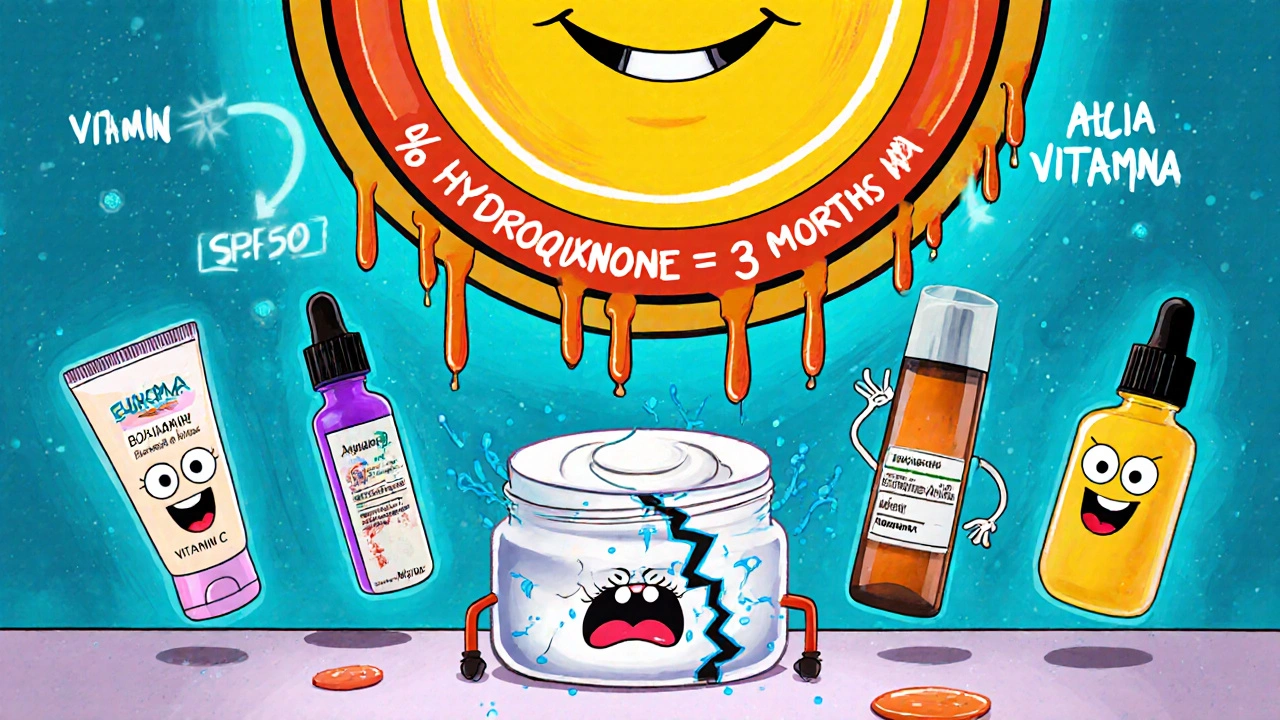
Eukroma Cream vs Alternatives: Hydroquinone Skin Lighteners Compared
Compare Eukroma Cream with safer, effective alternatives for treating hyperpigmentation and melasma. Learn how tranexamic acid, azelaic acid, niacinamide, and vitamin C can fade dark spots without hydroquinone's risks.