Eukroma Cream: Uses, Alternatives, and What You Need to Know
When you’re dealing with dark spots, melasma, or uneven skin tone, Eukroma Cream, a topical skin-lightening agent containing hydroquinone. Also known as hydroquinone cream, it works by reducing melanin production in the skin to fade discoloration over time. Unlike random bleaching products, Eukroma Cream is a medically recognized treatment, often prescribed when over-the-counter options fail to deliver results.
It’s not just about lightening skin—it’s about managing hyperpigmentation, a condition where patches of skin become darker due to excess melanin. This can come from sun damage, acne scars, hormonal changes, or even inflammation after a rash. Eukroma Cream targets those areas directly, but it doesn’t fix the root cause. That’s why it’s often paired with sunscreen and gentle skincare routines. People using it for melasma, for example, find it works best when combined with avoidance of UV exposure and consistent use over weeks, not days.
But Eukroma Cream isn’t the only option. Many users switch to azelaic acid, a gentler alternative that reduces pigmentation without the risks linked to long-term hydroquinone use, or try kojic acid, a natural ingredient derived from fungi that inhibits melanin. Some even turn to vitamin C serums or retinoids, which don’t bleach skin but encourage cell turnover to fade dark spots gradually. The choice depends on your skin type, sensitivity, and how aggressive you want to be with treatment.
There are risks, too. Long-term use of hydroquinone can lead to ochronosis—a rare but permanent blue-black darkening of the skin. That’s why most doctors recommend using Eukroma Cream in cycles: 3 months on, 3 months off. It’s also not for everyone. Pregnant women, people with sensitive skin, or those with darker complexions need to be extra cautious. Always patch test first, and never use it without understanding what you’re applying to your skin.
What you’ll find below are real, practical guides from people who’ve used Eukroma Cream—or alternatives to it. You’ll see how it stacks up against other treatments, what side effects actually happen, and how to avoid common mistakes. Whether you’re trying to fade post-acne marks, manage melasma, or just want even-toned skin, these posts give you the no-fluff facts you need to decide what works for your skin, not just what’s advertised.
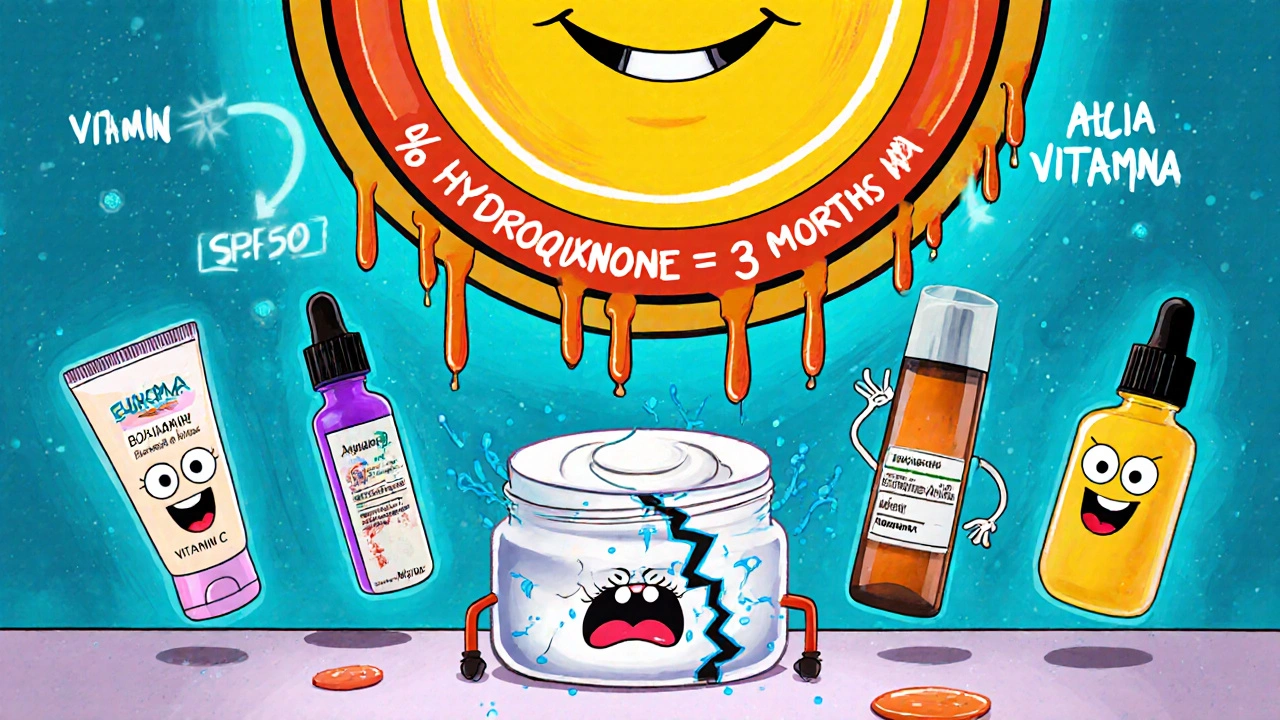
Eukroma Cream vs Alternatives: Hydroquinone Skin Lighteners Compared
Compare Eukroma Cream with safer, effective alternatives for treating hyperpigmentation and melasma. Learn how tranexamic acid, azelaic acid, niacinamide, and vitamin C can fade dark spots without hydroquinone's risks.