Aged Cheese: What It Is, How It Affects Health, and What You Should Know
When you eat aged cheese, a type of dairy product that undergoes prolonged fermentation and ripening to develop complex flavors and firmer textures. Also known as mature cheese, it’s a staple in many diets—but not always safe for everyone. Unlike fresh cheeses like ricotta or cottage cheese, aged cheese sits for weeks, months, or even years. During that time, bacteria and enzymes break down proteins and fats, creating strong tastes and longer shelf life. But that same process also builds up compounds that can affect your body in ways you might not expect.
One big thing to watch is sodium intake, the amount of salt naturally concentrated during the aging process. A single ounce of aged cheddar can have as much sodium as a bag of salty chips. If you’re on blood pressure meds or have heart issues, that adds up fast. Then there’s tyramine, a naturally occurring compound formed as proteins break down. It’s why people on certain antidepressants (like MAOIs) are told to avoid aged cheese—it can spike blood pressure dangerously. And if you’ve ever felt bloated or gassy after a slice of parmesan, that’s not just your imagination. lactose, the sugar in milk mostly gets broken down during aging, but trace amounts remain. For some, even that’s enough to trigger discomfort.
On the flip side, aged cheese is packed with calcium, protein, and probiotics that support bone and gut health. But here’s the catch: not all aged cheeses are created equal. Some are high in saturated fat, others are loaded with additives. And if you’re managing a chronic condition—like IBD, Parkinson’s, or even allergies—you need to know how it fits into your daily routine. The posts below dig into real cases: how cheese interacts with meds, why some people react differently, and what alternatives work better for sensitive systems. You’ll find practical advice from people who’ve been there—not just theory, but what actually works in everyday life.
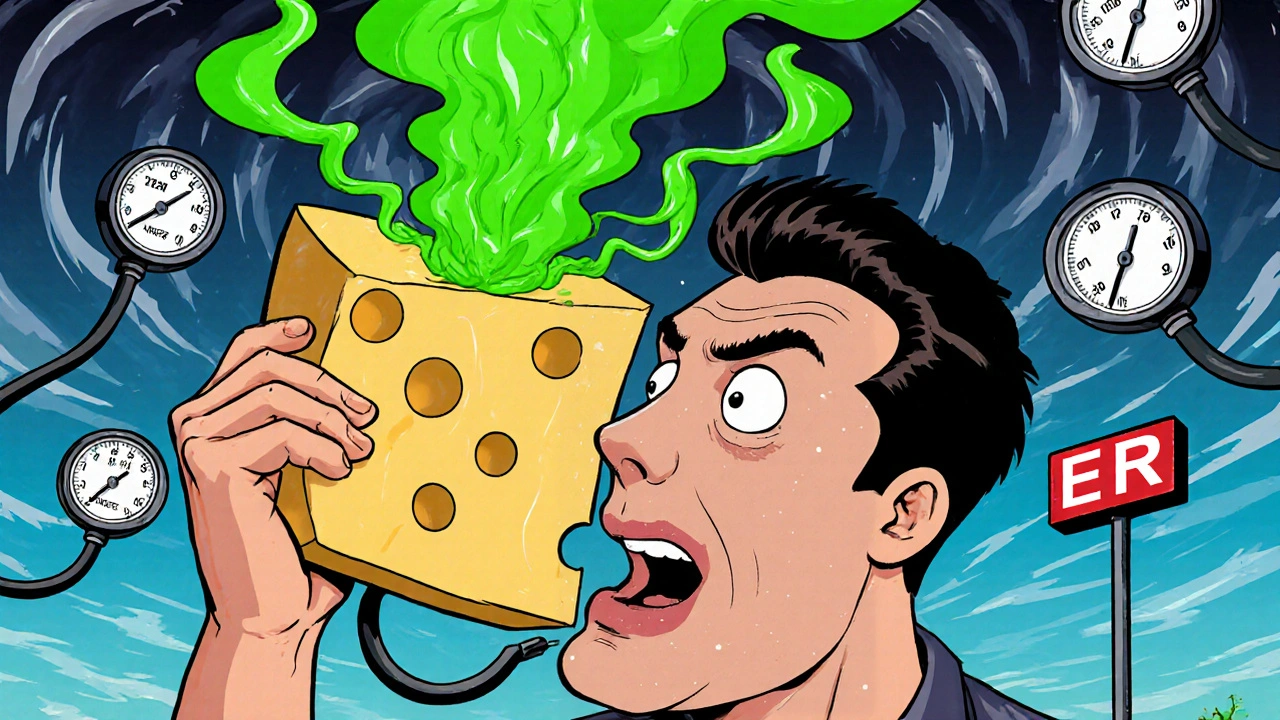
Aged Cheeses and Processed Meats: Dangerous Interactions with MAOI Medications
Aged cheeses and processed meats contain tyramine, which can cause life-threatening blood pressure spikes in people taking MAOI antidepressants. Learn which foods to avoid, safe alternatives, and how to manage this dangerous interaction.