ABCDE Rule: How to Spot Skin Cancer Early and What to Do Next
When you notice a new spot or a mole that’s changing, the ABCDE rule, a simple, evidence-based method used by dermatologists to identify potentially cancerous skin lesions. Also known as melanoma checklist, it’s not a diagnosis tool—but it’s the best first step you can take to catch skin cancer early, when it’s most treatable. Most people don’t realize that melanoma, the deadliest form of skin cancer, can develop in places you’d never expect—not just on sun-exposed skin, but under nails, on the scalp, or even inside the mouth. The ABCDE rule turns a confusing visual into a clear checklist you can use anytime, anywhere.
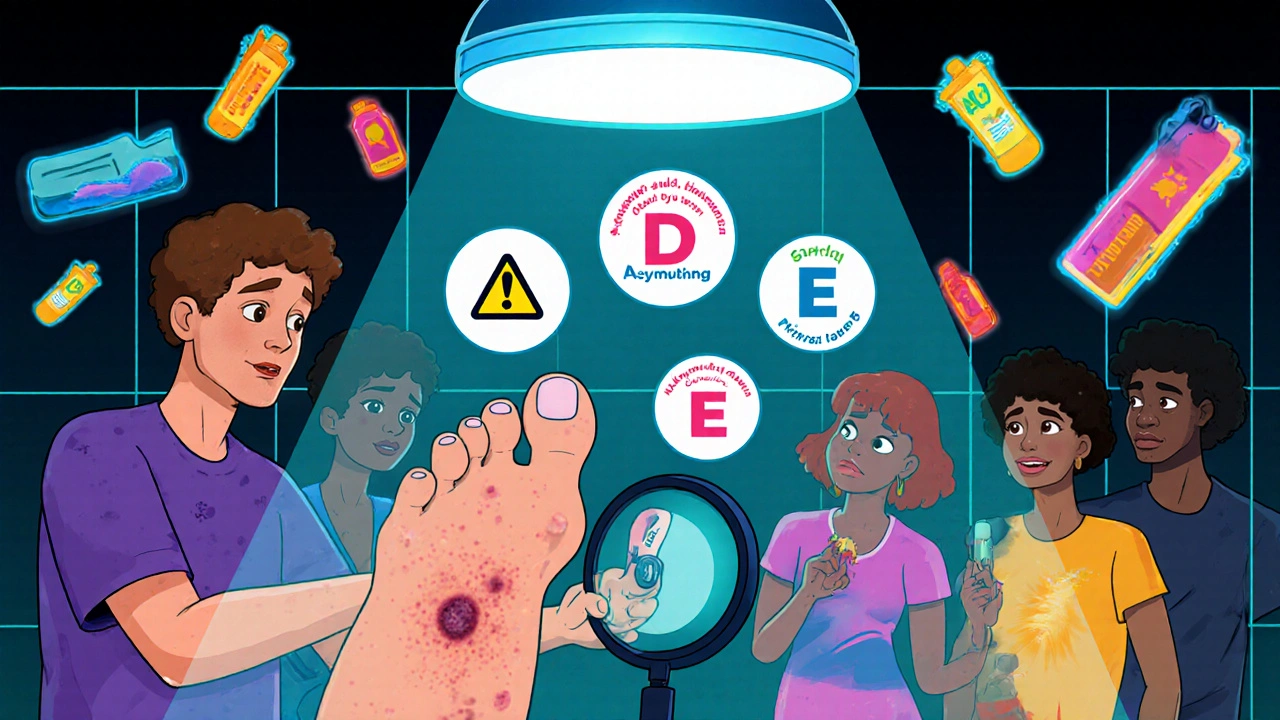
The ABCDE rule, a standardized framework for evaluating moles and skin growths breaks down warning signs into five easy-to-remember traits: Asymmetry, Border, Color, Diameter, and Evolving. If a mole is uneven on both sides (Asymmetry), has jagged or blurry edges (Border), shows multiple colors like black, red, or white (Color), is larger than a pencil eraser (Diameter), or has changed in size, shape, or texture over weeks or months (Evolving)—it’s time to get it checked. You don’t need a medical degree to spot these. Just use a mirror, take a photo every few months, and compare. Skin cancer doesn’t always look like the dark, ugly moles you see in ads. Sometimes it’s just a tiny spot that won’t go away.
People often ignore changes because they think, "It’s always been like that." But melanoma can grow fast. A study in the Journal of the American Academy of Dermatology found that 70% of melanomas diagnosed in people under 40 were new spots, not changes in existing moles. That means even if you’ve never had a weird mole before, you still need to watch for new ones. The skin lesion assessment, the process of examining moles using visual cues like the ABCDE rule isn’t just for high-risk groups. Anyone with skin, regardless of tone or age, should use this method. Darker skin doesn’t protect you—it just makes early detection harder because melanomas often appear in less obvious places, like the palms or soles.
What you find under your nails, on your back, or behind your ear might not be harmless. The melanoma signs, visible indicators like asymmetry, irregular borders, or color variation that signal possible skin cancer are subtle, but they’re consistent across populations. That’s why dermatologists rely on this rule—it’s simple, reliable, and works whether you’re in London, Lagos, or Los Angeles. You can’t always wait for a doctor’s appointment. By the time you see a red, itchy, or bleeding spot, it might already be advanced. But if you catch it early, the cure rate is over 98%.
Below, you’ll find real-world guides that show you how to use the ABCDE rule in daily life—whether you’re checking your child’s skin, managing a history of sunburns, or tracking changes after a mole removal. You’ll learn how to photograph moles for comparison, what tools dermatologists use beyond the naked eye, and how to avoid common mistakes like confusing a benign freckle with something dangerous. These aren’t theory pieces. They’re practical, tested tips from people who’ve been there.
Melanoma: How to Prevent, Detect, and Treat Skin Cancer Early
Melanoma is the deadliest skin cancer, but early detection can lead to a 99% survival rate. Learn how to prevent it with UV protection, spot warning signs using the ABCDE rule, and understand modern treatments that are saving lives.