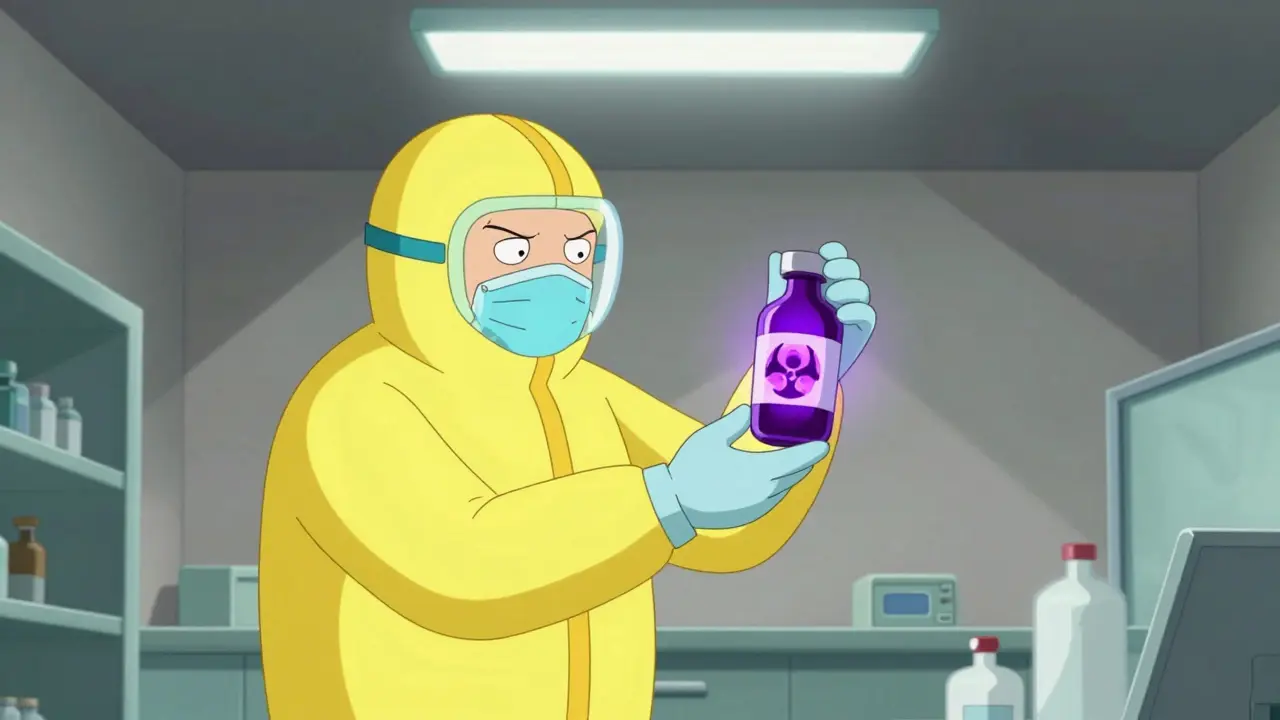
Chemotherapy isn't just about treating cancer; it's about managing powerful toxins without harming the people around them. When you handle antineoplastic drugs, you are dealing with substances designed to kill rapidly dividing cells. That power makes them dangerous for nurses, pharmacists, patients, and even family members cleaning up after treatment. The stakes are high. A single spill or a missed verification step can lead to long-term health issues or fatal medication errors.
Safety protocols have evolved significantly over the last four decades. What started as basic guidelines in the 1980s has transformed into a rigorous, multi-layered system of checks, engineering controls, and personal protective equipment (PPE). Today, the gold standard is defined by the ASCO/ONS Antineoplastic Therapy Administration Safety Standards, which were updated in 2024 to address modern therapies like immunotherapies and targeted agents. These standards aren't optional suggestions; they are the backbone of safe oncology practice.
The Core Framework: ASCO/ONS 2024 Standards
The American Society of Clinical Oncology (ASCO) and the Oncology Nursing Society (ONS) updated their comprehensive safety standards in February 2024. This revision shifted terminology from "chemotherapy" to "antineoplastic therapy" to include newer treatments like antibody-drug conjugates and bispecific antibodies. The framework rests on four pillars:
- Safe Environment: Facilities must use engineering controls like closed-system transfer devices (CSTDs) and proper ventilation.
- Patient Consent and Education: Patients must understand their diagnosis, drug names, doses, duration, and goals before starting.
- Ordering and Verification: This includes a newly mandated fourth verification step at the bedside.
- Monitoring: Continuous observation during and after administration, including specific protocols for cytokine release syndrome (CRS).
Dr. Gary H. Lyman, Professor of Medicine at Duke University and lead author of the update, highlights that the mandatory fourth verification step addresses a critical gap. Patient identification errors accounted for 18% of chemotherapy-related adverse events in the 2022 NCCN Safety Database report. By requiring two licensed clinicians to verify the patient using two identifiers right at the bedside, facilities aim to eliminate this preventable risk.
Personal Protective Equipment (PPE): More Than Just Gloves
You cannot rely on intuition when handling hazardous drugs. The National Institute for Occupational Safety and Health (NIOSH) categorizes these drugs into five risk groups, each demanding specific precautions. For most antineoplastic agents, the baseline requirement includes:
- Chemotherapy-tested double gloves: Standard latex or nitrile gloves may not stop permeation. Drugs like carmustine and thiotepa require specialized double-gloving techniques to prevent skin absorption.
- Impermeable gowns: Gowns must be fluid-resistant and non-porous to protect clothing and skin.
- Eye protection: Essential whenever splashing is possible, such as during reconstitution or IV line connections.
- Respiratory protection: Required when aerosols are anticipated, particularly during spill cleanup or preparation of volatile agents.
A common misconception is that outer gloves can be kept on while touching door handles or phones. Research dating back to 1992 confirms that contamination transfers easily from outer gloves to hands and surfaces. All PPE is considered contaminated once used for handling. You must remove gloves carefully, perform hand hygiene, and dispose of all gear as hazardous waste immediately.
| Entity/Standard | Primary Focus | Key Requirement | Implementation Cost Estimate |
|---|---|---|---|
| ASCO/ONS (2024) | Clinical Administration | Fourth bedside verification, CRS management | $22k-$35k per facility (modifications) |
| USP <800> | Pharmacy Compounding | Containment primary engineering controls (C-PECs) | Varies by facility size |
| NIOSH | Occupational Exposure | Drug-specific risk categorization (Groups 1-5) | Training and PPE costs |
| ESMO | European Guidelines | Emphasis on Closed-System Transfer Devices (CSTDs) | High initial equipment investment |
The Fourth Verification Step: Why It Matters
Traditionally, chemotherapy involved three checks: pharmacy verification, nurse intake check, and pre-administration review. The 2024 ASCO/ONS standards add a crucial fourth step: a real-time verification performed at the patient's bedside by two licensed clinicians. This process uses two patient identifiers (such as name and date of birth) to ensure the right person receives the right drug.
Critics argue this adds time. Nurse 'ChemoRN2020' on Reddit noted that this step adds 7-10 minutes per patient, straining already tight schedules. However, data suggests the trade-off is worth it. Facilities implementing full ASCO/ONS standards see a 63% reduction in medication errors. The Association of Community Cancer Centers (ACCC) reports that full compliance also leads to 78% fewer occupational exposures compared to partial implementation.
This step is not just about bureaucracy; it’s about catching human error before it becomes harm. In a busy infusion center, distractions are constant. A second pair of eyes focused solely on identity and drug match acts as a final safety net.
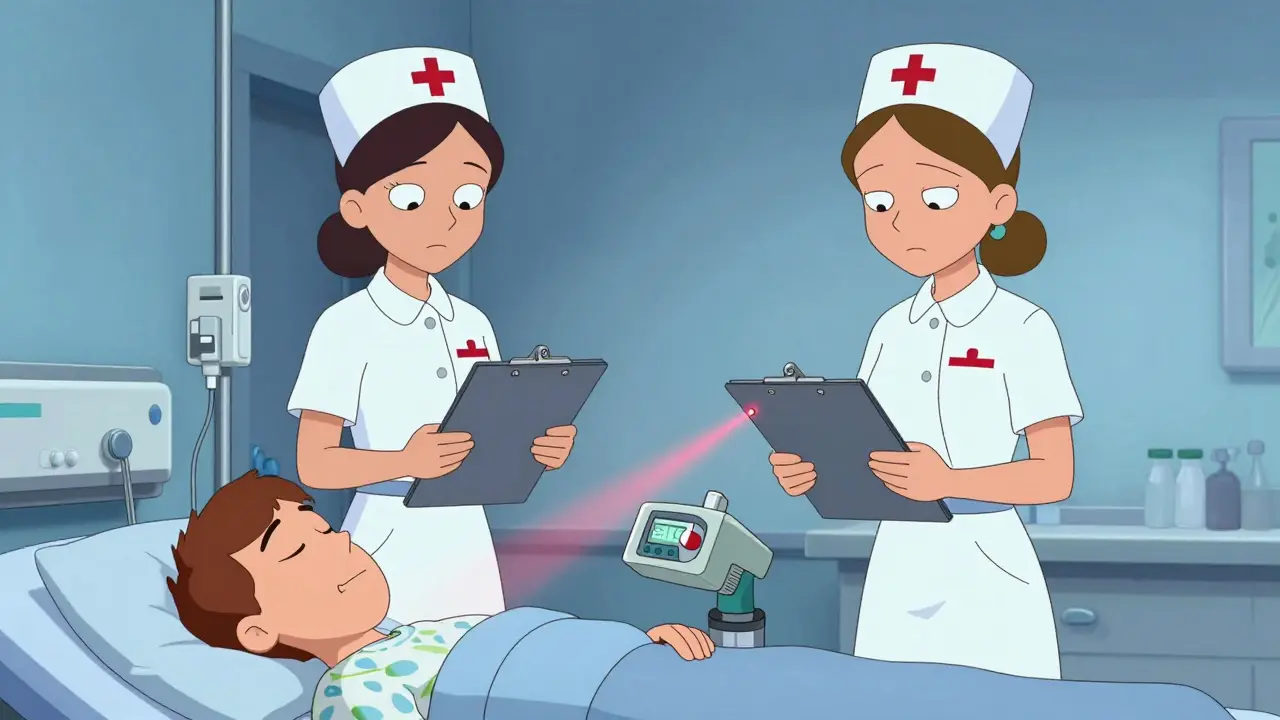
Managing Cytokine Release Syndrome (CRS)
Newer therapies, particularly immunotherapies and CAR T-cell treatments, carry a unique risk: Cytokine Release Syndrome (CRS). This is a systemic inflammatory response that can be life-threatening if not managed quickly. Between 2018 and 2022, immunotherapy-related CRS cases increased by 300%. Without proper management, mortality rates hover between 12-15%.
The 2024 standards now mandate institutional policies for CRS management. This means:
- Antidotes and CRS-directed therapies (like tocilizumab) must be readily accessible.
- Staff must be trained to recognize early signs: fever, hypotension, and respiratory distress.
- Monitoring protocols must extend beyond the infusion room into post-treatment follow-up.
Facilities that fail to prepare for CRS risk severe patient outcomes. The integration of these protocols reflects the shift from traditional cytotoxic chemotherapy to complex biological therapies.
Home-Based Chemotherapy: The Hidden Risk Zone
While hospital settings are tightly controlled, home-based chemotherapy presents significant challenges. The American Cancer Society reports that 22% of home care incidents involve improper disposal of hazardous waste, and 17% involve inadequate spill management. Caregivers often lack the training and resources available in clinical settings.
Patients receiving treatment at home must follow strict guidelines:
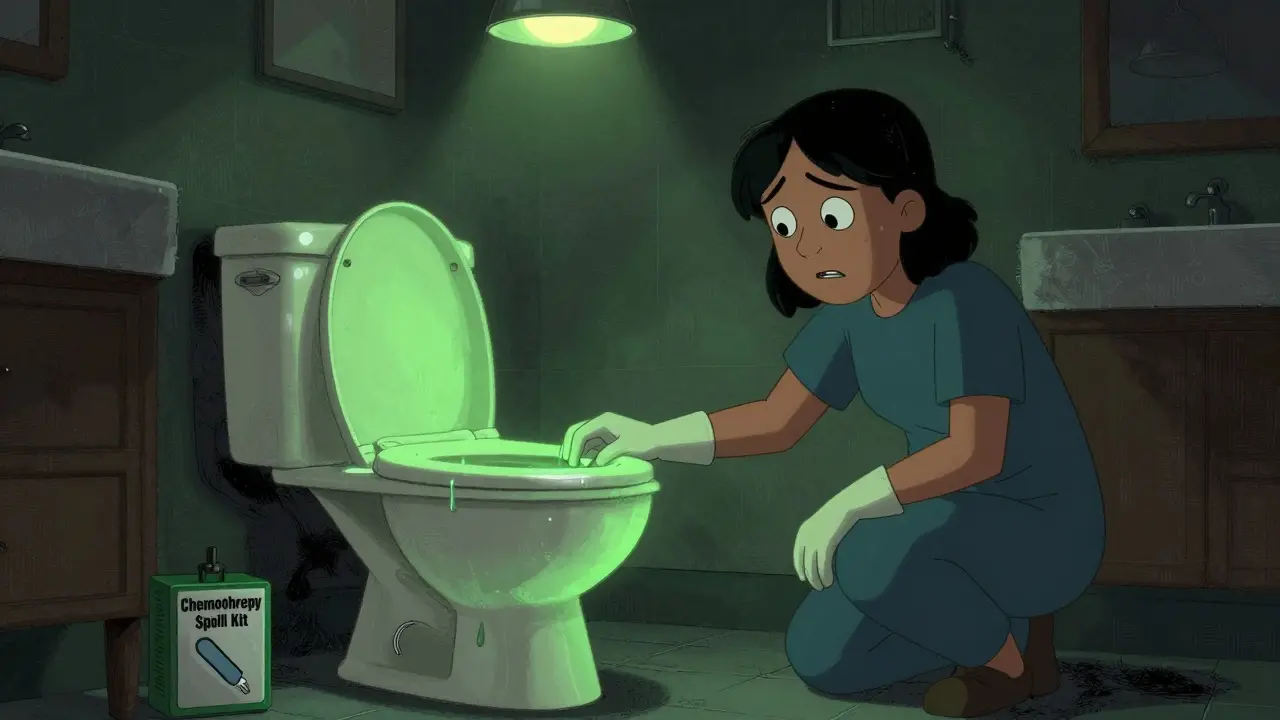
- Bodily Fluids: Treat urine, vomit, and sweat as hazardous for 48-72 hours post-treatment. Flush toilets twice with the lid down. Wear gloves when handling soiled laundry.
- Spill Kits: Keep a chemotherapy-specific spill kit handy. Do not use regular household cleaners.
- Storage: Store medications in child-proof locations, away from pets and children.
- Disposal: Use approved sharps containers for needles and syringes. Never throw them in regular trash.
Despite these guidelines, 65% of home caregivers feel inadequately prepared. The Cancer Support Community found that facilities using the ASCO-developed Chemotherapy Safety at Home toolkit saw a 41% reduction in caregiver-reported safety concerns. Education is key-patients need more than a pamphlet; they need hands-on training.
Costs and Implementation Challenges
Implementing these standards is not free. For a medium-sized oncology practice with 10-15 providers, the initial investment ranges from $22,000 to $35,000 for facility modifications, plus $8,500 to $12,000 for staff training. Annual ongoing costs for PPE and hazardous waste disposal average $4,200 to $6,800.
One major hurdle is electronic health record (EHR) integration. A 2023 survey revealed that 67% of facilities needed custom EHR builds costing $15,000 to $40,000 to support the multiple verification steps. Without seamless digital support, manual checks become prone to fatigue and error.
However, the cost of inaction is higher. OSHA issued 142 citations for hazardous drug handling violations in 2022, with average penalties of $14,250 per violation. Beyond fines, preventable adverse events cost the healthcare system an estimated $147 million to $220 million annually. Full implementation could prevent 1,200-1,800 serious adverse events each year.
Future Directions: AI and Certification
The landscape of chemotherapy safety is evolving. Pilot programs launching in late 2024 at 12 NCI-designated cancer centers are testing AI-powered verification systems to reduce the manual burden on nurses. These systems use barcode scanning and facial recognition to automate parts of the verification process, potentially freeing up staff time while maintaining accuracy.
Additionally, the National Comprehensive Cancer Network (NCCN) plans to integrate these standards into its facility accreditation program starting January 2025. This will require documented evidence of fourth verification implementation and CRS management protocols. Looking ahead, standardized national certification for chemotherapy administration personnel is expected by 2026, ensuring consistent competency across the industry.
What is the fourth verification step in chemotherapy administration?
The fourth verification step is a mandatory process introduced in the 2024 ASCO/ONS standards. It requires two licensed clinicians to verify the patient's identity using two identifiers (e.g., name and date of birth) and confirm the correct drug and dose at the patient's bedside immediately before administration. This step aims to eliminate patient identification errors, which previously caused 18% of chemotherapy adverse events.
Why do chemotherapy handlers need double gloves?
Double gloving provides an extra layer of protection against permeation and puncture. Certain chemotherapeutic agents, like carmustine and thiotepa, can penetrate standard single gloves. Using chemotherapy-tested double gloves reduces the risk of skin absorption and subsequent occupational exposure to hazardous drugs.
How should patients manage bodily fluids after chemotherapy?
Patients should treat urine, vomit, sweat, and semen as hazardous for 48-72 hours after treatment. They should flush toilets twice with the lid down, wear gloves when handling soiled laundry, and wash clothes separately from other household items. This prevents secondary exposure to family members.
What is Cytokine Release Syndrome (CRS)?
CRS is a severe inflammatory response triggered by some immunotherapies and cellular therapies. Symptoms include high fever, low blood pressure, and difficulty breathing. It requires immediate medical intervention with antidotes like tocilizumab. The 2024 ASCO/ONS standards mandate that facilities have ready access to these treatments and staff trained to recognize early signs.
Are there financial incentives for following chemotherapy safety standards?
While implementation costs money, non-compliance carries higher risks. OSHA penalties average $14,250 per violation. Moreover, preventing adverse events saves an estimated $147-$220 million annually in healthcare costs. Insurance premiums and liability risks also decrease with robust safety protocols.
Sean Estabrooks
July 8, 2026 AT 19:29They want you to believe that the "fourth verification step" is about safety, but look closer at the data. The ASCO/ONS update in 2024 isn't just a guideline; it's a surveillance mechanism disguised as care. They are tracking every single interaction between patient and provider using these new digital mandates. The mention of AI-powered verification systems with facial recognition? That is not medicine; that is biometric data harvesting on a massive scale. They claim it reduces errors by 18%, but who controls that database? Who owns your biometric signature when you stand there for a "bedside check"? It is all part of the great consolidation of health data into private corporate hands while they sell your vulnerability back to you as "safety."
jeremy pritchett
July 9, 2026 AT 23:30Yo listen up! This fourth check thing is actually huge and we need to get behind it cause lives are literally on the line here. I know its annoying and takes time but think about it man if you give the wrong drug someone dies and thats not cool. We gotta be smarter about this stuff and stop being lazy. Safety first always!
fred morgan
July 11, 2026 AT 18:03The implementation costs cited in the article are significant, yet the potential liability savings justify the expenditure. OSHA penalties averaging $14,250 per violation create a compelling financial argument for compliance beyond mere ethical considerations.
Gavin Edley
July 12, 2026 AT 10:27I don't know why everyone is so obsessed with these new rules. My aunt got chemo twenty years ago with zero protocols and she's fine. All this talk about CRS and double gloves sounds like fear-mongering to keep us dependent on the medical industrial complex. Honestly, it feels like they are making it more complicated just to charge us more for their time. Why do I need two nurses to verify my name? Do they think I'm going to vanish into thin air? It's ridiculous bureaucracy.
Kimberly Simbulan
July 14, 2026 AT 08:04Oh, absolutely, because nothing says "trust me bro" like ignoring established safety standards. Your aunt survived, sure, but what about the nurses who developed cancer from handling those drugs without proper PPE? The article clearly states that occupational exposure risks are real and documented. Maybe instead of dismissing the science, you could acknowledge that progress exists for a reason. But hey, keep ignoring the data if it makes you feel superior.
kavitha kumar
July 15, 2026 AT 10:07i cant even with all this stress about chemo safety at home its overwhelming honestly. my mom had to flush the toilet twice every time for days and it felt so weird and isolating. nobody tells you how scary it is to handle laundry like its radioactive waste. i wish people understood the emotional toll of being treated like a biohazard in your own house. it makes you feel dirty and alone when you just want normalcy. why does no one talk about the loneliness of it all?
Alana Frassinelli
July 16, 2026 AT 14:53you know i hear you on that isolation thing and its really heavy. it sucks to feel like you have to hide or protect others from yourself when you are already fighting so hard inside. i remember reading about how caregivers often feel inadequate too which adds another layer of guilt. maybe finding support groups specifically for home care patients could help share some of that burden so you dont feel like you are carrying it all alone. its okay to ask for help with the spill kits and the laundry sorting because you deserve to be cared for too not just managed. take it one day at a time and try not to let the protocols consume your whole identity during this treatment phase.
Sarah Boomgaard
July 17, 2026 AT 03:06People are too soft now. You should just tough it out. The body knows how to heal itself if you stop interfering with chemicals. These doctors are just selling poison and calling it cure. It is immoral to inject toxins into a living person regardless of the fancy gloves they wear. True health comes from nature not from a lab coat and a barcode scanner. Wake up.