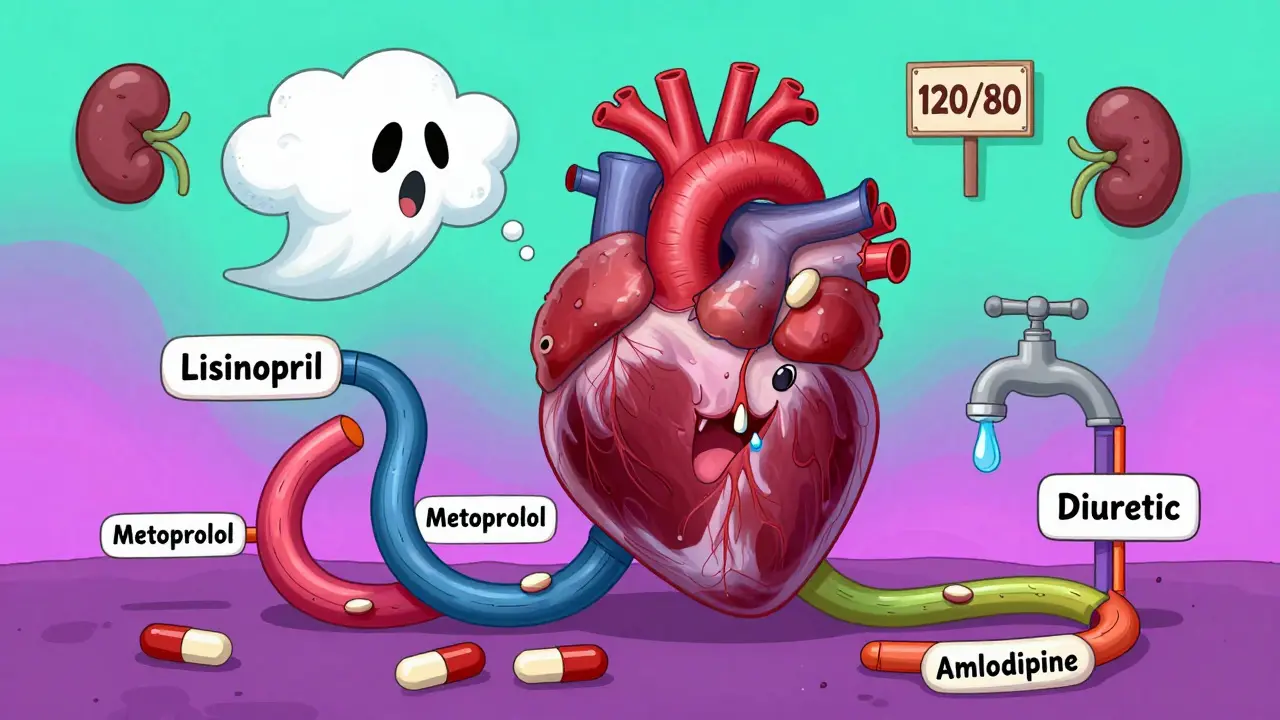
High blood pressure doesn’t come with warning signs, but it quietly raises your risk of stroke, heart attack, and kidney damage. That’s why millions of people take blood pressure medications every day. Not all of them work the same way, and not all work for everyone. Knowing the difference between ACE inhibitors, beta blockers, and other common drugs can help you understand why your doctor chose one over another - and what to expect if side effects show up.
How Blood Pressure Medications Work
Your blood pressure is the force of blood pushing against your artery walls. When it stays too high for too long, it strains your heart and damages your vessels. Medications don’t cure high blood pressure, but they help your body manage it better. Each class works differently: some relax blood vessels, others reduce heart rate, and some help your kidneys flush out extra fluid.
The American Heart Association says nearly half of U.S. adults have hypertension. In the UK, the NHS estimates 1 in 4 adults are affected. The goal isn’t just to lower numbers - it’s to prevent heart failure, kidney disease, and stroke. Studies like the SPRINT trial showed that getting systolic pressure below 120 mmHg (instead of 140) cut heart problems by 25% and death by 27% in high-risk patients. That’s why treatment has gotten more aggressive in recent years.
ACE Inhibitors: The ‘-il’ Drugs
ACE inhibitors - like lisinopril, enalapril, and ramipril - are among the most prescribed blood pressure meds. Their names end in ‘-il’, which makes them easy to spot. They work by blocking an enzyme called angiotensin-converting enzyme. This stops your body from making angiotensin II, a chemical that tightens blood vessels. With less of it, your vessels relax, and pressure drops.
They’re especially useful if you have diabetes, kidney disease, or heart failure. The kidneys benefit because ACE inhibitors reduce pressure inside the filtering units, slowing damage. But there’s a well-known catch: about 15-20% of people develop a dry, hacking cough. It’s not dangerous, but it’s annoying enough that many stop taking the drug. One Reddit user described it as ‘a cough that kept me up every night for months.’ Switching to an ARB (like losartan) often fixes it within days.
Another risk is high potassium levels (hyperkalemia), especially if you have kidney problems or take other meds like NSAIDs. Your doctor will check your kidney function and potassium every few months. And while ACE inhibitors are often first-line for many, they’re not ideal for Black patients without kidney disease - studies show they’re less effective here than calcium channel blockers.
Beta Blockers: Slowing Down the Heart
Beta blockers - metoprolol, atenolol, carvedilol - end in ‘-olol’. They work by blocking adrenaline’s effect on your heart and blood vessels. This lowers heart rate, reduces how hard your heart pumps, and decreases blood pressure. They’re not usually the first choice for pure high blood pressure anymore, but they’re essential for other conditions.
If you’ve had a heart attack, have heart failure, or suffer from angina, beta blockers are often lifesavers. They reduce the heart’s workload and prevent dangerous rhythms. But for someone with just high blood pressure and no heart disease, they’re not the best option. A 2005 trial called ASCOT found that amlodipine (a calcium channel blocker) worked better than atenolol at preventing heart attacks and strokes.
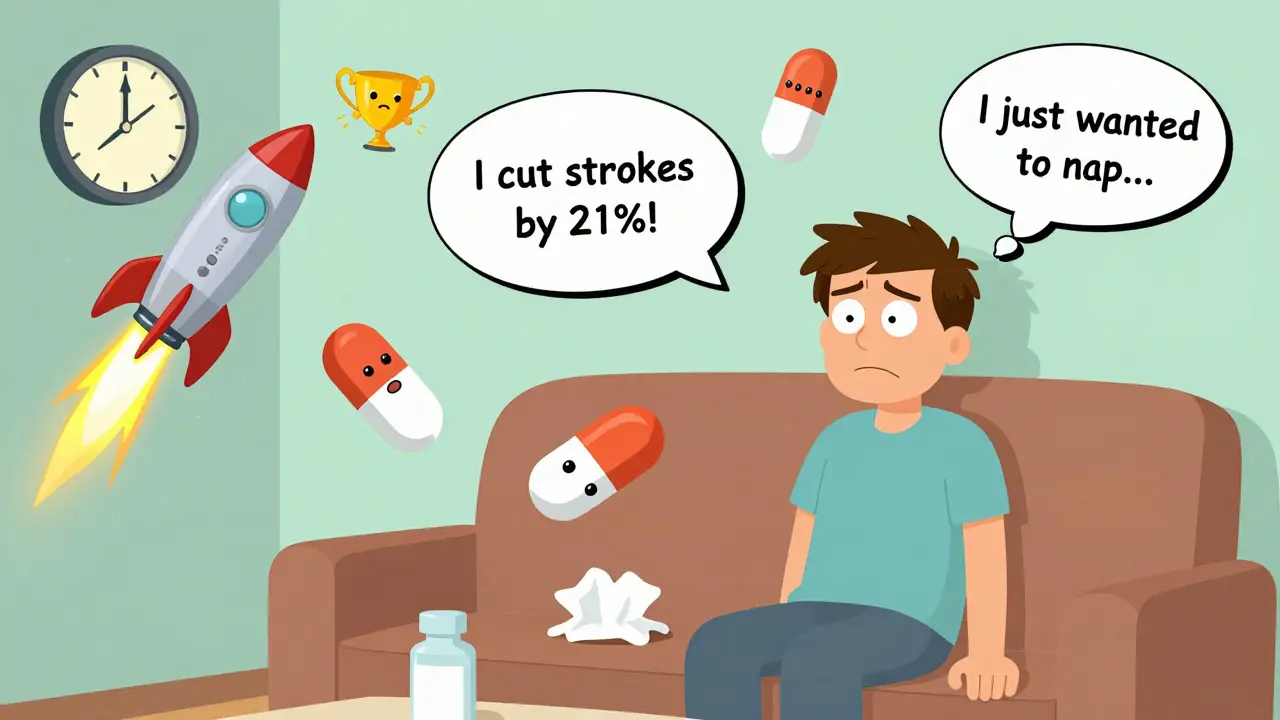
Side effects are common. Fatigue, dizziness, cold hands, and low energy are frequent complaints. One Drugs.com review called metoprolol ‘the drug that made me useless at work.’ Sexual dysfunction and weight gain also happen. And if you have asthma or diabetes, beta blockers can make things worse - they may trigger breathing attacks or hide low blood sugar symptoms like shaking and rapid heartbeat.
Calcium Channel Blockers: Relaxing the Vessels
Calcium channel blockers (CCBs) like amlodipine, nifedipine, and diltiazem are among the most effective for lowering blood pressure. They block calcium from entering muscle cells in your arteries, which lets the vessels relax and widen. Amlodipine is the most common - it’s cheap, long-lasting, and works well for most people.
They’re especially good for older adults and people with isolated systolic hypertension (high top number, normal bottom number). The ALLHAT trial showed they prevented strokes better than ACE inhibitors. And unlike some drugs, they work just as well regardless of body weight. A 2018 study found hydrochlorothiazide lost effectiveness in lean people, but amlodipine didn’t.
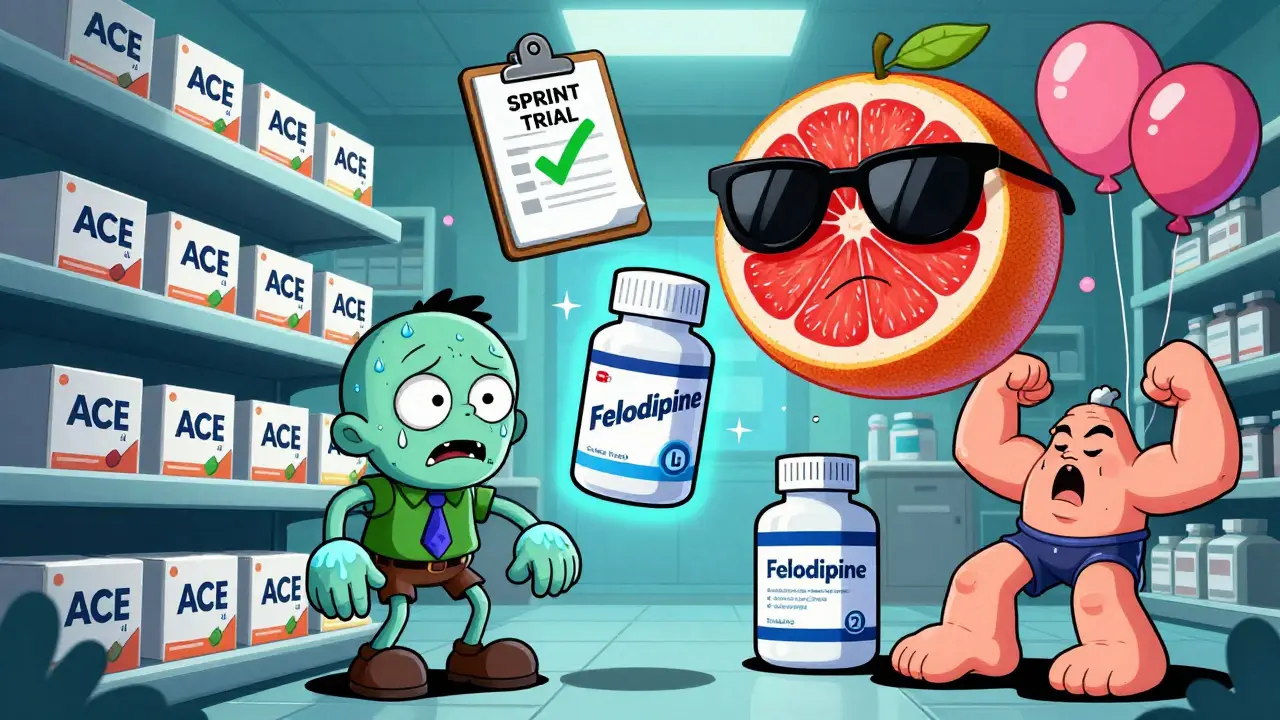
The biggest side effect? Swelling in the ankles and feet. It’s harmless for most, but can be uncomfortable. Some people also get headaches or dizziness at first. And here’s a little-known tip: grapefruit juice can boost the level of certain CCBs - like felodipine - in your blood by up to 300%. If you’re on one of these, skip the grapefruit.
Diuretics: The ‘Water Pills’
Diuretics - often called water pills - help your kidneys get rid of extra salt and water. This reduces blood volume, which lowers pressure. Thiazide diuretics like hydrochlorothiazide and chlorthalidone are the most common. They’re inexpensive, effective, and recommended as first-line by most guidelines.
But not all diuretics are equal. Chlorthalidone is actually better than hydrochlorothiazide at preventing heart attacks and strokes. A 2020 study showed it cut cardiovascular events by 21% more than the older drug. Yet, many doctors still prescribe hydrochlorothiazide because it’s been around longer. Chlorthalidone lasts longer (24 hours vs. 12) and has more consistent effects.
Side effects include frequent urination (especially at first), low potassium, and dizziness. You’ll need blood tests every few months to check your electrolytes. Some people avoid them because they don’t like needing to pee so often - but that usually settles down after a few weeks.
ARBs: The Alternative to ACE Inhibitors
Angiotensin II receptor blockers - losartan, valsartan, irbesartan - end in ‘-sartan’. They do something similar to ACE inhibitors but work at a different step. Instead of blocking enzyme production, they block the receptors that angiotensin II binds to. The result? Lower blood pressure without the cough.
Because they don’t cause that dry cough, ARBs are often used when ACE inhibitors fail. One user on Reddit switched from lisinopril to losartan and said the cough vanished in 72 hours. The LIFE study found losartan reduced heart problems and death by 13% more than atenolol in patients with enlarged hearts.
Like ACE inhibitors, ARBs can raise potassium and affect kidney function. They’re not recommended for pregnant women. And while they’re great for many, studies suggest they’re less effective than ACE inhibitors in Black patients - which is why some experts still prefer ACE inhibitors here.
Combination Therapy: Two Are Often Better Than One
Most people with high blood pressure need more than one drug. A 2023 analysis found that combining two medications lowers systolic pressure 4-5 mmHg more than doubling the dose of one. That’s a big deal - every 5 mmHg drop cuts stroke risk by 10%.
Fixed-dose combinations (one pill with two drugs) are becoming standard. Examples include:
- Benicar HCT: olmesartan + hydrochlorothiazide
- Diovan HCT: valsartan + hydrochlorothiazide
- Exforge: amlodipine + valsartan
- Lotrel: amlodipine + benazepril
These make adherence easier. A 2022 study found people on single-pill combos were 26% more likely to stick with treatment. And with generics, most cost just $4-$10 per month. Brand-name combos can run $350 - but you rarely need them.
Choosing the Right Medication
There’s no one-size-fits-all. Your doctor picks based on your age, race, other conditions, and side effect history.
- For most people: Thiazide diuretics (chlorthalidone preferred), calcium channel blockers, or ACE inhibitors/ARBs.
- With kidney disease: ACE inhibitors or ARBs - they protect the kidneys.
- After a heart attack: Beta blockers or ACE inhibitors.
- Older adults with high systolic pressure: Calcium channel blockers.
- Black patients without kidney disease: Calcium channel blockers or thiazides - ACE inhibitors are less effective here.
- If you get a cough: Switch from ACE inhibitor to ARB.
It’s not just about the drug - it’s about how your body responds. Some people feel great on lisinopril. Others can’t tolerate it at all. Your first med might not be your final one. Most people need adjustments over weeks or months.
What You Should Monitor
Medication isn’t a set-it-and-forget-it thing. You need regular check-ups:
- Check blood pressure at home - aim for under 130/80.
- Get kidney function and potassium tested every 3-6 months if on ACE inhibitors, ARBs, or diuretics.
- Watch for swelling (CCBs), cough (ACE inhibitors), fatigue (beta blockers), or dizziness (any).
- Don’t stop suddenly. Stopping beta blockers can cause rebound high blood pressure or even a heart attack.
What’s Next?
New treatments are on the horizon. In late 2023, the FDA approved an implantable device that zaps nerves around the kidneys to lower blood pressure - a game-changer for people who don’t respond to pills. Researchers are also testing drugs that target multiple pathways at once, like ARNIs (sacubitril/valsartan), which already help heart failure patients.
But the biggest problem isn’t new drugs - it’s adherence. Only about half of people with high blood pressure get it under control. Many stop because of side effects, cost, or forgetfulness. The best medication is the one you’ll take every day. If yours isn’t working, talk to your doctor. There’s almost always another option.
What’s the difference between ACE inhibitors and ARBs?
Both lower blood pressure by blocking the angiotensin system, but they work differently. ACE inhibitors stop the enzyme that makes angiotensin II. ARBs block the receptor that angiotensin II binds to. The biggest practical difference? ACE inhibitors often cause a dry cough - ARBs don’t. ARBs are usually chosen if you can’t tolerate the cough.
Are beta blockers still used for high blood pressure?
They’re not first-line anymore for most people with just high blood pressure. Studies show calcium channel blockers and diuretics prevent strokes and heart attacks better. But beta blockers are still essential for people with heart failure, after a heart attack, or with angina. They’re not about lowering numbers - they’re about protecting the heart.
Why is chlorthalidone better than hydrochlorothiazide?
Chlorthalidone lasts longer (24 hours vs. 12), lowers blood pressure more consistently, and has stronger evidence for preventing heart attacks and strokes. A 2020 study found it reduced cardiovascular events by 21% more than hydrochlorothiazide at the same dose. Despite this, many doctors still prescribe hydrochlorothiazide out of habit.
Can I take grapefruit juice with my blood pressure pill?
It depends on the drug. Grapefruit juice can dangerously increase levels of certain calcium channel blockers like felodipine, nifedipine, and amlodipine - sometimes by 300%. This raises the risk of dizziness, low blood pressure, and heart rhythm problems. If you’re on one of these, avoid grapefruit entirely. For most other blood pressure meds, it’s fine.
Why do some people need two or three blood pressure pills?
High blood pressure has multiple causes. One drug might relax blood vessels, another might remove fluid, and a third might slow the heart. Combining them works better than using a higher dose of one. Studies show two drugs together lower pressure more than doubling one drug. Plus, fixed-dose combos (one pill with two drugs) improve adherence - people are more likely to take one pill than three.


Natali Shevchenko
March 22, 2026 AT 05:13It's wild how much we've changed our approach to hypertension over the last two decades. Back in the 90s, everyone got beta blockers like they were candy. Now we know it's not about just lowering numbers-it's about protecting organs, preventing strokes, and respecting how different bodies respond. I remember my dad being on atenolol for years until his cardiologist switched him to amlodipine. He went from feeling like a zombie to actually enjoying walks again. It's not magic, but it's science that finally listened to the patient, not just the guideline.
And honestly, the fact that we're now recommending chlorthalidone over hydrochlorothiazide after all these years? That's a quiet revolution. Doctors still prescribe the old one out of habit, but the data doesn't lie. It's like using a flip phone when you've got a smartphone in your pocket. We need to update our prescribing habits as fast as we update our phones.
The grapefruit warning? That's one of those things everyone forgets until they end up in the ER. I had a friend who swore by his morning grapefruit juice with his nifedipine. One day he passed out in the grocery store. Turns out, the juice doubled his drug levels. Scary stuff. Simple advice, huge consequences.
And then there's the silence around adherence. Nobody talks about how hard it is to take pills every day when you're asymptomatic. You don't feel sick, so why bother? But the damage is still happening. That's the real villain-not the medication, but the invisibility of the disease. We need better systems, not just better drugs.
I also think we need to stop acting like ACE inhibitors are the gold standard for everyone. They're great for some, but for Black patients without kidney disease? The evidence is clear: they're just not as effective. Yet so many still get prescribed them first. It's not laziness-it's ignorance baked into medical training. We need to fix that.
And what about the cost? People think $4 a month for generics is cheap, but when you're living paycheck to paycheck, even that's a burden. And insurance labyrinths? Don't get me started. The best drug in the world is useless if you can't access it.
Finally, the new implantable nerve device? Fascinating. But I wonder how many people will ever get it. Will it be available in rural clinics? Or just fancy urban hospitals? We can't solve hypertension with tech alone. We need equity, education, and empathy too.
Bottom line: medicine is moving forward. But humanity? We're still catching up.
Nishan Basnet
March 22, 2026 AT 16:00What a beautifully detailed breakdown. I’ve been managing hypertension for over a decade now, and this is the clearest summary I’ve ever read-no jargon, no fluff, just straight science with real-world context. The part about chlorthalidone being superior to hydrochlorothiazide? I had no idea. My doctor stuck me on HCTZ because it was ‘the standard,’ but after reading this, I’m going to ask for a switch. Small changes, massive impact.
Also, the grapefruit warning? I’m guilty. I love my morning glass of juice with my amlodipine. Now I know why I’ve been getting dizzy lately. Time to swap it for orange juice. Thank you for the wake-up call.
And yes, adherence is the silent epidemic. We treat hypertension like a checklist item, not a lifelong partnership with your body. I’ve stopped pills for weeks because I ‘felt fine.’ Then my BP spiked. Lesson learned the hard way. Consistency > perfection.
trudale hampton
March 24, 2026 AT 13:25Love this. Seriously. I’ve been on lisinopril for 6 years and had that cough for the first 8 months. Thought I was just getting sick. Turns out it was the med. Switched to losartan and life changed. No cough, no drama. Just steady numbers.
Also, the combo pills? Game changer. One pill instead of three? Yes please. I used to forget half the time. Now I take it with my coffee and never miss. Adherence isn’t about willpower-it’s about design.
And don’t even get me started on how we still prescribe beta blockers like they’re the answer for everyone. They’re lifesavers for heart patients, but for just plain high BP? Nah. My doc finally listened after I showed him the ASCOT study. Took two years, but worth it.
Solomon Kindie
March 25, 2026 AT 12:06Casey Tenney
March 26, 2026 AT 16:37Stop giving people so many pills. Just tell them to eat less salt, move more, and lose weight. No drug works if you’re still eating fries and sitting on the couch. This whole system is a scam.
Bryan Woody
March 27, 2026 AT 15:57Let’s be real-the entire pharmaceutical industry profits from people being confused. You take one drug, get side effects, switch to another, get new side effects, then they slap two together into a combo pill and charge you $350 for it. Meanwhile, the cheapest, most effective drug-chlorthalidone-is still buried under decades of outdated prescribing habits.
And don’t even get me started on grapefruit. You can’t drink juice but you can drink 6 beers? That’s not science. That’s capitalism.
Here’s the truth: hypertension isn’t a disease. It’s a symptom of a broken lifestyle. But nobody wants to fix that. Too expensive. Too hard. So we give you a pill. Then another. Then a third. And a monthly lab test. And a specialist. And a co-pay. And a cop-out.
Meanwhile, your neighbor who walks 2 miles a day and eats vegetables? His BP is 118/76. No meds. No drama. Just discipline.
So yeah. The drugs work. But the real cure? It’s not in a pharmacy. It’s in your kitchen. And your shoes.
Timothy Olcott
March 28, 2026 AT 11:29shannon kozee
March 30, 2026 AT 04:16One thing missing here: the emotional toll. Taking meds daily for a condition you can’t feel is exhausting. It’s not just about side effects-it’s about identity. Am I sick? Am I broken? Am I now someone who needs pills to survive? That’s a heavy weight.
And while we talk about efficacy and trials, we rarely talk about how hard it is to talk to your doctor about stopping something. You fear they’ll think you’re lazy. Or noncompliant. Or weak.
So you stay on the drug. Even if it makes you tired. Even if it makes you feel weird. Even if you hate it.
We need to normalize saying: ‘This isn’t working for me.’ Not as failure. As part of the process.
Nicole James
March 31, 2026 AT 13:59Did you know the FDA approved these drugs based on studies funded by the same companies that make them? And the SPRINT trial? It was stopped early because they were afraid people would find out how dangerous aggressive lowering really is. They didn’t want to admit that pushing BP below 120 might cause kidney damage in older adults. They buried the data.
And what about the potassium spikes? That’s not a side effect-it’s a warning sign they’re poisoning your system slowly. And diuretics? They deplete magnesium too. You know what magnesium deficiency does? Causes heart arrhythmias. So we treat one problem by creating another.
They’re not curing you. They’re managing you. For profit.
And don’t tell me about generics. The active ingredient is the same, but the fillers? Different. I switched from a generic amlodipine to another brand and got severe vertigo. Coincidence? I think not.
There’s a reason they don’t want you to know about lifestyle changes. They can’t patent kale.
Allison Priole
April 2, 2026 AT 12:09I’ve been on amlodipine for 5 years and honestly? It’s been life-changing. I used to get dizzy every time I stood up. Now I can chase my toddler around without feeling like I’m gonna pass out.
And yeah, the ankle swelling is annoying-but I just wear compression socks and call it a day. No biggie.
My mom was on lisinopril and had that cough for 18 months. She thought she had allergies. We didn’t connect it until she switched to valsartan and poof-gone. Like magic.
It’s not perfect, but these drugs? They’re giving us time. Time to adjust. Time to heal. Time to find the right combo. I’m not mad at the science. I’m grateful for it.
Also, I love that we’re finally talking about chlorthalidone. My new doc switched me from HCTZ and I didn’t even notice… until I checked my BP. It dropped 10 points. That’s huge.
And grapefruit? I switched to orange juice. Tastes almost the same. No drama.
Medicine isn’t magic. But sometimes, it’s enough.
Sandy Wells
April 3, 2026 AT 14:07Too much information. Just give me one pill that works. Why is this so complicated?
Natali Shevchenko
April 3, 2026 AT 22:37That’s the thing, isn’t it? We’re all just trying to survive the system. The science is there. The data is clear. But the delivery? Broken. Doctors are overworked. Patients are overwhelmed. And the pills? They’re just one piece of a much bigger puzzle.
Maybe the real breakthrough won’t be a new drug-but a better conversation. One where we stop treating hypertension like a math problem and start treating it like a human experience.
Because no one ever died from high blood pressure.
They died from feeling alone in it.