Emergency Medication Kit: What to Keep and Why It Matters
When every second counts, an emergency medication kit, a portable collection of life-saving drugs for acute medical events. Also known as a crisis drug pack, it’s not just for people with chronic conditions—it’s for anyone who might face sudden allergic reactions, opioid overdoses, or severe asthma attacks. Think of it like a fire extinguisher: you hope you never need it, but you won’t sleep well without one nearby.
Most people don’t realize that naloxone, a fast-acting drug that reverses opioid overdoses is now available without a prescription in most places. It’s the single most important item in any emergency kit for households with opioid users, or even just people who live near high-risk environments. Then there’s epinephrine, an auto-injector used to stop anaphylactic shock from food, insect stings, or medications. If someone in your home has severe allergies, this isn’t optional—it’s a daily safeguard. These aren’t just drugs; they’re tools that turn panic into action.
But an emergency kit isn’t just about what’s inside. It’s about accessibility. Keeping your emergency medication kit locked away in a cabinet defeats the purpose. It needs to be easy to grab—on the fridge, by the door, in the car. Labels matter too. If your epinephrine pen says "EpiPen" but your prescription is for "Auvi-Q," you’ll waste precious time during a crisis. Write the drug name, dose, and expiration date on the outside with a permanent marker. Check it every three months. Expired epinephrine still works better than nothing, but you shouldn’t gamble on it.
Some people think these kits are only for the elderly or chronically ill. That’s not true. A teenager with a peanut allergy. A parent with a child on opioids for pain. A grandparent on multiple heart meds who might have a bad reaction. Even someone who just lives in a remote area where ambulances take 20 minutes to arrive. These are all valid reasons to build one. And if you’ve ever read about someone dying because they didn’t have access to naloxone or an EpiPen, you know this isn’t theoretical.
The posts below cover real-world stories and practical advice about how to build, maintain, and use these kits effectively. You’ll find guides on when to co-prescribe naloxone with opioids, how to store medications safely without risking accidental ingestion, and what to do when a loved one has a reaction. Some posts explain how to read labels so you know exactly what’s in your kit. Others show you how to avoid dangerous interactions—like keeping antihistamines away from MAOI drugs, or how fiber supplements can delay absorption of other pills. This isn’t just about having the right drugs. It’s about knowing how they work, when they’re needed, and how to act fast without freezing up.

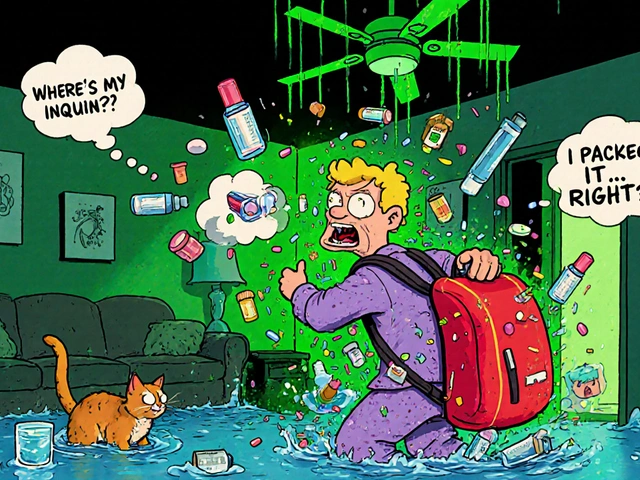
Medication Safety in Emergencies: What to Keep in Your Go-Bag
Build a medication go-bag with a 7- to 14-day supply of prescriptions, emergency contacts, and vital documents. Keep it accessible, check it twice a year, and protect temperature-sensitive drugs like insulin. Don't wait until it's too late.